英语写作常见错误纠正
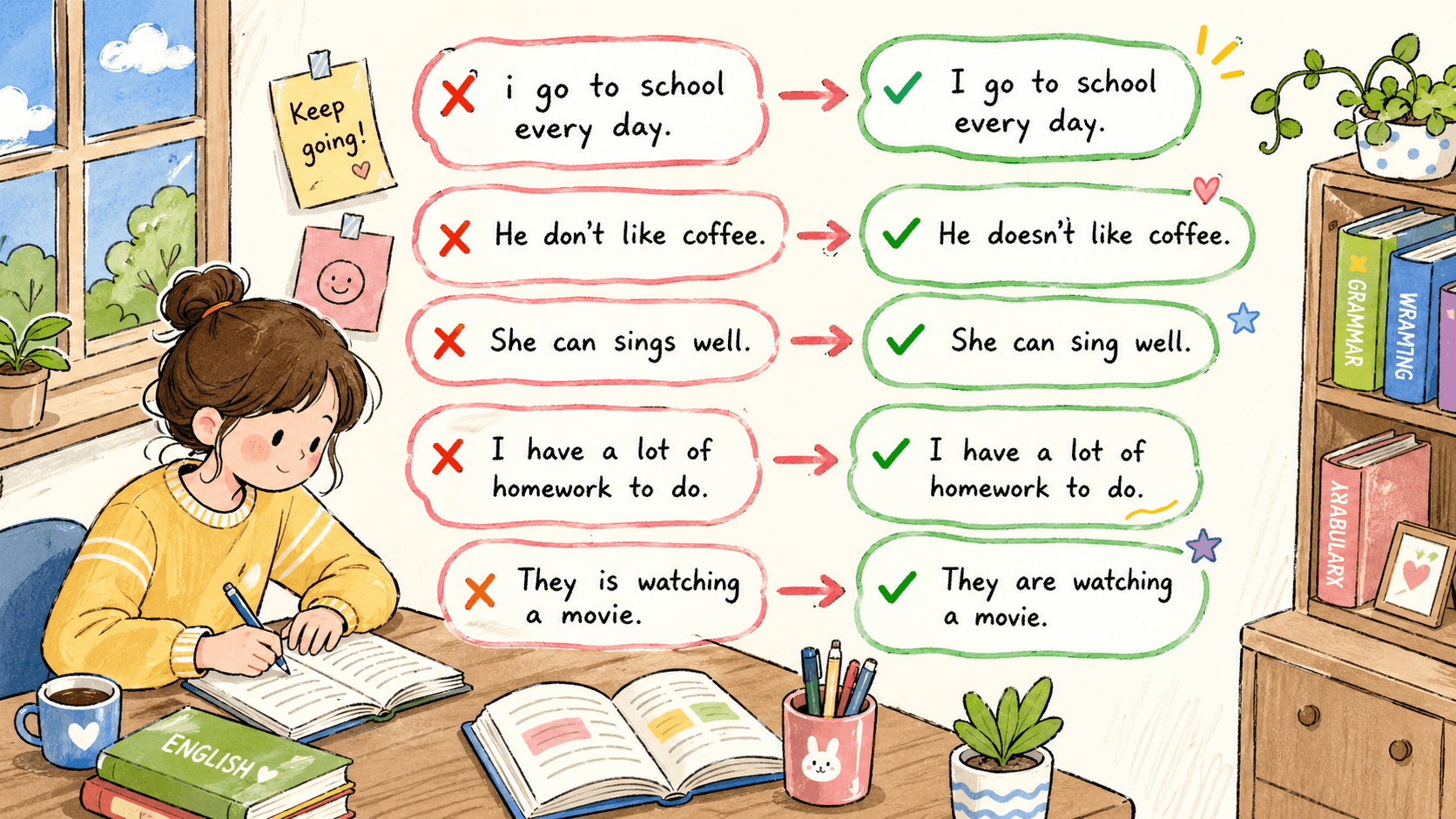
写作能力的提升,离不开“不断积累新知识”和“逐步改正过往错误”这两个方面。对于母语为中文的英语学习人群来说,有时即使已经掌握了不少语法和词汇,写作时仍会反复出现某些常见的错误。这些问题往往并非源于知识盲区,而是受到中文表达习惯、思维方式等无意识影响,导致用英语写作时出现偏差。
例如,受到母语迁移(mother-tongue transfer)的影响,我们很容易用直译的方法表达思想,却忽略了英语自身的表达逻辑和地道用法。有时候,即使在语法上没有错误,但用词与句型不够自然,也会让文章显得生硬或者难以让英语母语者理解。此外,英文和中文在句子结构、主谓一致、时态用法等方面有很大差异,如果不加以注意,常常会写出“中式英语”(Chinglish),影响表达效果。
很多人在写作过程中也会发现:即使语法书学过,遇到实际表达时,某些习惯性的结构和用法还是容易出错。这些错误反复出现,若不引起重视,就会成为长期难以纠正的“顽疾”。为了真正提升英语写作能力,仅仅学习新知识还远远不够,还需要花时间和精力识别自己容易犯的错误,并通过持续练习和有针对性的修改,将这些错误逐步纠正过来。
因此,在提升写作能力的道路上,主动发现并及时纠正常见错误,与学习新知识同样重要。只有这样,才能让写作水平真正稳步提升,更加符合英语母语者的表达习惯,从而写出更地道、自然、易于理解的英文作品。最终,我们的写作也会因此更具说服力和影响力,为学业、工作甚至日常沟通带来更多可能性。
错误一:主谓不一致(Subject-Verb Agreement)
英语动词必须和主语的人称与数一致。第三人称单数在一般现在时中需要加“-s/-es”。这个规则看似简单,但丢掉动词“-s”、把名词单复数与动词混用,是中文母语者写作中反复出现的高频错误。
| 错误句(Error) | 正确句(Correction) | 语法解析(Rule) |
|---|---|---|
| She go to work every day. | She goes to work every day. | 第三人称单数动词要加“-s”。 |
| The team are going to present tomorrow. | The team is going to present tomorrow. | 美式英语中“team”等集体名词用单数动词。 |
| There is many reasons. | There are many reasons. | “There be”结构谓语与后面名词一致。 |
| My family are very big. | My family is very big. | 美式英语中“family”看作单数。 |
| Either Tom or his friends is coming. | Either Tom or his friends are coming. | “Either...or...”谓语与最近主语一致。 |
当主语为带有修饰语或复杂结构时,切记找准“核心主语”再决定谓语的单复数。例如,“One of the main factors is...”中的主语其实是“one”,所以用单数动词“is”。
部分表达在英式英语与美式英语中有所不同。例如,“The team are winning.”(英式,团队成员各自作为复数);“The team is winning.”(美式,整体看作单数)。写作时建议统一。
错误二:冠词的使用(Articles: a/an/the)
冠词(articles)是中文学习者最容易忽略的语法点之一,因为汉语没有冠词这一概念。冠词的正确使用,对于让句子地道自然、意思明晰至关重要。
“a/an”(不定冠词):泛指,第一次提到,单数可数名词。a用于辅音音素开头,an用于元音音素开头。
- She is a teacher. (她是一名老师。)
- I need a pen. (我需要一支笔。)
- I saw an apple on the table.(我在桌子上看到一个苹果。)
“the”(定冠词):特指,双方都知道指的是哪个,上文提到过的,或世界上独一无二的事物。
- I bought a book. The book was very interesting.(我买了一本书。这本书非常有趣。)
- Please close the door.(请关上门。说话双方都知道是哪扇门。)
- The sun rises in the east.(太阳从东方升起。)
零冠词(没有冠词): 用于复数可数名词的泛指、不可数名词泛指、专有名词前。
- Cats are independent animals.(猫是独立的动物。)
- Water is essential for life.(水是生命不可或缺的。)
- I study at Beijing University.(我在北京大学学习。)
- Music is her favorite hobby.(音乐是她最喜欢的爱好。)
最常见的冠词错误与分析:
小结扩展:
- 第一次提及可数名词单数时用 a/an;再次指代、已知或特定对象前用 the。
- 不可数名词一般不用a/an,也尽量避免the,除非特指。
- 泛指一类事物(如dogs, computers)用复数形式且不用the。
- 最高级、序数词、世界独一无二的事物(the first time, the sun)前都需加the。
- 某些地名、交通工具、用餐、上学、上床、上班等情况习惯不用the:go to school/work/bed/by bus。
写作初期可以先养成习惯:遇到可数名词单数时总要想一想是否需要冠词;再次提及或指明特定对象时用the,不确定或泛指时考虑用a/an。
错误三:时态不一致
在一段话或一篇文章中,应该保持一致的时态,除非有充分的理由转换。如果频繁或随意地切换时态,容易导致句子逻辑混乱,降低表达的清晰度。尤其是在叙述一串动作或讲述个人经历时,要注意时态一致。此外,在讲故事、写作经历、描述事实和表达普遍真理时,通常需要选择并保持适当的时态。
-
❌ I walked to the market, and then I buy some vegetables, and I come home.
✅ I walked to the market, bought some vegetables, and came home.
解析:叙述过去发生的动作,时态需统一为一般过去时,表达清晰,否则时序混乱。 -
❌ Yesterday I see a movie. It was good and I enjoy it.
✅ Yesterday I saw a movie. It was good and I enjoyed it.
解析:描述昨天发生的事情,所有动作都应使用过去时,保持时态一致。 -
❌ He studies in the morning and ate lunch at noon.
✅ He studied in the morning and ate lunch at noon.
解析:两个动作都指过去,时态要统一为过去时,避免时间线割裂。 -
❌ When I was a child, I am afraid of the dark.
✅ When I was a child, I was afraid of the dark.
解析:讲述过去的状态,主句和从句都应使用过去时(was),保持时态一致。
小提示:
- 描写故事、回忆、历史等经过时,通常使用一般过去时。
- 描述客观事实、普遍真理、习惯时,使用一般现在时。
- 有时候时态切换是合理的,比如引用别人的观点或介绍客观事实。
错误四:介词搭配错误(Prepositions)
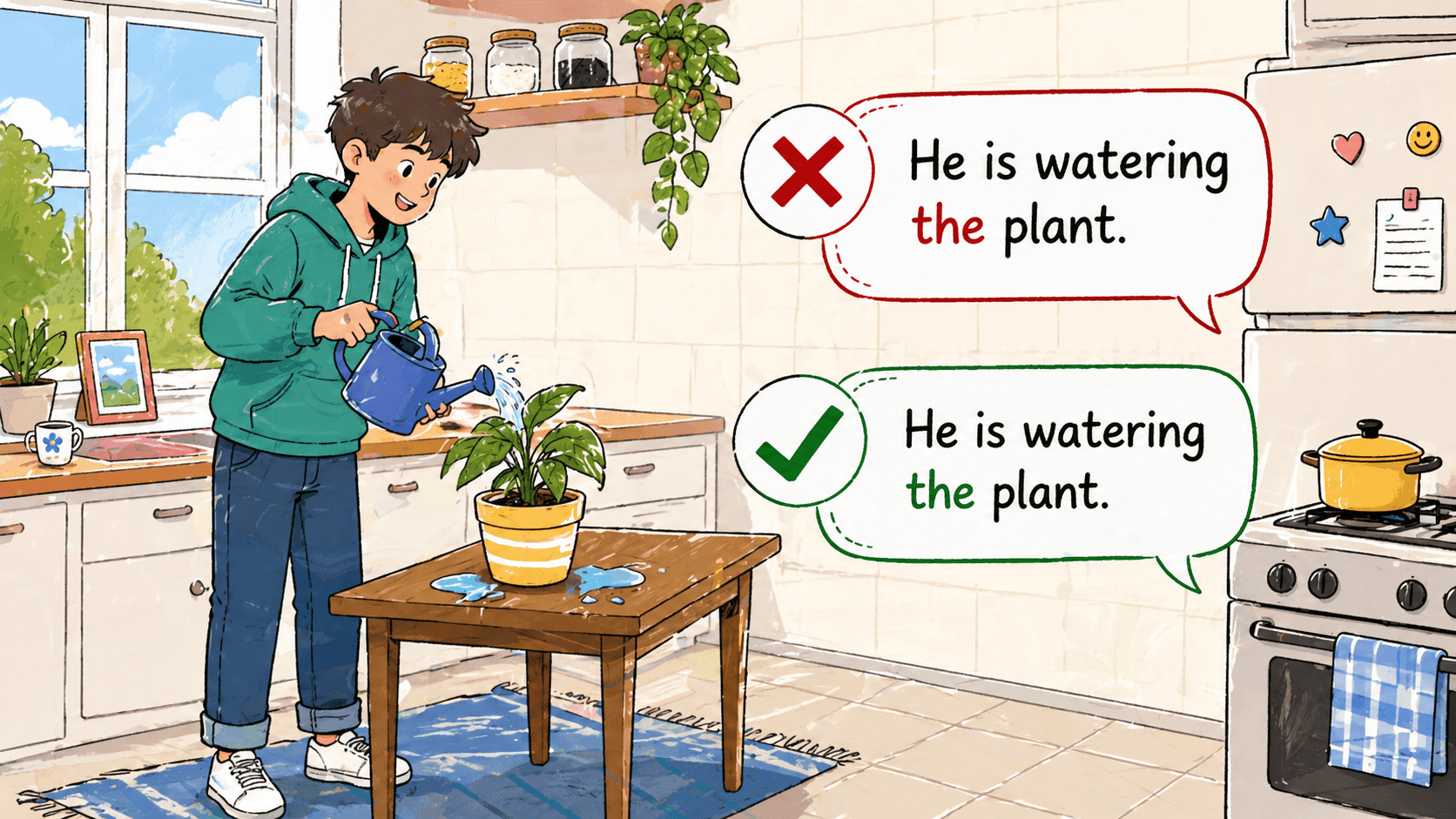
英语介词的用法常常没有明确的逻辑,需要大量记忆和积累。这是中文学习者写作中最容易出错的地方之一,尤其是介词与时间、地点、动词的固定搭配。
常见错误(时间介词)
❌ “in Monday”→ ✅ “on Monday”
❌ “on April”→ ✅ “in April”
❌ “at 2023”→ ✅ “in 2023”
❌ “at night of Monday” → ✅ “on Monday night”
规律总结:
- in(用于:月份、年份、季节、较长的时间段):in July, in 2023, in winter, in the morning
- on(用于:具体日期、星期、特定的一天、具体某天的某个时间):on Monday, on April 1st, on my birthday, on Sunday afternoon
- at(用于:具体时刻、节假日、夜晚):at 7 o’clock, at noon, at night, at Christmas
常见错误(动词+介词搭配)
❌ “I am interested about English.” → ✅ “I am interested in English.”
❌ “She is good in math.” → ✅ “She is good at math.”
❌ “He arrived to Shanghai.” → ✅ “He arrived in Shanghai.”
❌ “She waited me at the bus stop.” → ✅ “She waited for me at the bus stop.”
❌ “Discuss about the problem.” → ✅ “Discuss the problem.”(discuss后不用about)
❌ “Listen music.” → ✅ “Listen to music.”
❌ “Depend of the weather.” → ✅ “Depend on the weather.”
❌ “Married with him.” → ✅ “Married to him.”
❌ “Please explain me this.” → ✅ “Please explain this to me.”
❌ “He is responsible of the project.” → ✅ “He is responsible for the project.”
例子分析(介词搭配篇)
Jane is interested in learning English. Every morning, she listens to music before school. Sometimes, she discusses her homework with her friends at the library. Last week, she arrived in Beijing and waited for her cousin at the train station. She is good at math, but she often depends on her classmate for help with physics. Her teacher is responsible for the science club and always explains new topics to the students. Jane hopes to get married to a kind person in the future.
简对学习英语很感兴趣。每天早上,她在上学前都会听音乐。有时,她会在图书馆和朋友们讨论作业。上周,她到了北京,并在火车站等她的表姐。她数学很好,但物理常常依赖同学的帮助。她的老师负责科学俱乐部,并总是给学生们讲解新知识。简希望将来能嫁给一个善良的人。
记忆建议:
- 多背常见词组和例句。
- 阅读英文原文,留意介词搭配的实际用法。
- 针对自己常混淆的搭配,多做整理和对比。
错误五:可数名词与不可数名词混淆
有些英语名词虽然在中文里经常和数字或“一个、一些”等数量词连用,但在英语中是典型的不可数名词,不能直接用“a/one”修饰,也不能简单地加“-s”变复数。这类词在中式英语写作中失误率特别高。
常见不可数名词
补充说明:
- 不可数名词一般不能与冠词a/an连用,也不可直接加复数。表达数量时,常用“a piece of, an item of, a bit of, a lot of, some”等结构。
- 除上述名词外,还有progress, knowledge, bread, water, work, rice, paper, jewelry, traffic, etc.等也都是不可数名词。
- 有些名词在特殊语境下既可数又不可数,如“chicken”作“鸡肉”时不可数,作“鸡(动物)”时可数。
错误六:比较级的双重标记
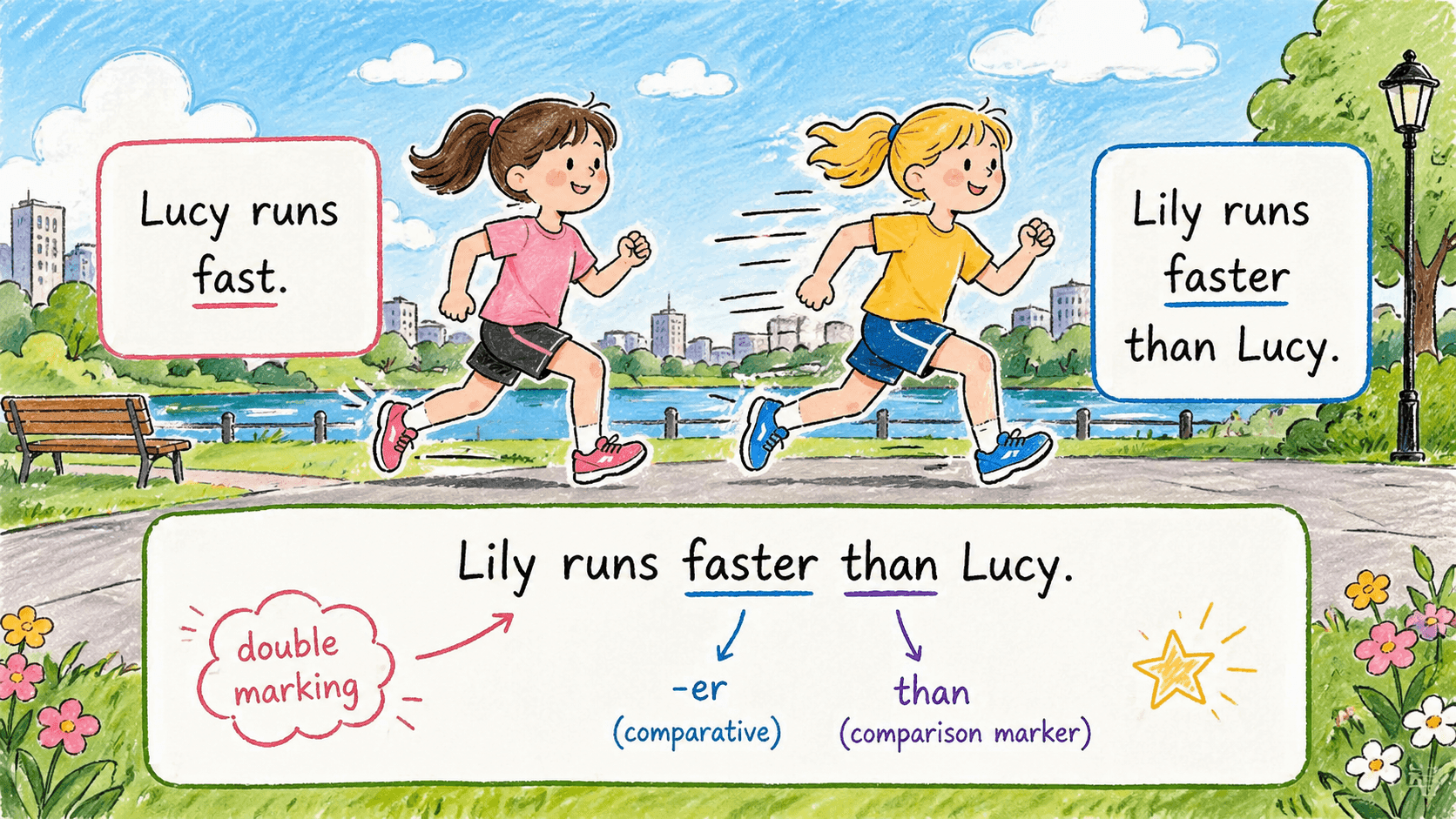
比较级和最高级的表达只能选用一种形式:要么用词尾加“-er”或“-est”,要么用“more”/“most”来构成,千万不能把两种方法混用,否则就成了严重语法错误。通过理解形容词、和副词比较级、最高级的规则,可以避免此类常见错误。
❌ “This is more cheaper.”→ ✅ “This is cheaper.”
❌ “She is more smarter than her brother.”→ ✅ “She is smarter than her brother.”
❌ “It's the most beautifullest place.”→ ✅ “It's the most beautiful place.”
❌ “James is the most cleverest student in class.”→ ✅ “James is the cleverest student in class.”
❌ “My car is more faster than yours.”→ ✅ “My car is faster than yours.”
补充说明:
- 一般情况下,单音节和部分双音节形容词(如 tall, fast, clever, easy)用“-er”/“-est”构成比较级和最高级:taller, tallest, easier, easiest, cleverer, cleverest。
- 多音节形容词(如 beautiful, interesting, important, comfortable)通常用“more”/“most”来构成:more beautiful, most interesting。
- 不能出现“more + -er”或者“most + -est”这类“双重标记”句式,类似于“超级叠加”,在英语中是不允许的(也要避免在作文或口语表达时下意识混用)。
- 有些形容词有不规则变化(特殊比较级和最高级形式),如:
- good → better → best
- bad → worse → worst
不能用“more good”、“more better”、“more worse”等说法。
易错点提醒: 有些常见形容词如“clever”既可用“-er/-est”也可以用“more/most”,但两者只能二选一:
- She is cleverer than me. / She is more clever than me.(任选其一, 切勿写成“more cleverer”)
有些副词也有类似规则,例如:
- fast → faster
- happily → more happily
不能说“more faster”或“more happilyer”。
错误七:中式英语直译(Chinglish)
这类表达错误通常是由于直接用中文思维逐词翻译,句子结构和单词的语法虽然看似没问题,但表达方式不地道,和英语母语者的习惯大相径庭。多数情况下,这些表达并不是绝对的语法错误,而是常见的“中式英文”现象,会影响英语表达的自然度和准确性。
-
副词修饰误区
- ❌ I very like this book.
- ✅ I really like this book. / I like this book very much.
- “very” 不能直接修饰动词,修饰动词需用 “really”,或将 “very much” 放句末。
-
地道表达正名
- ✅ We have three days off. / I hope you can come.
- 这两个表达完全地道,母语者常用,无须修改。
-
时态连用冲突
- ❌ Yesterday I have went to the library.
- ✅ Yesterday I went to the library.
- 明确的过去时间状语须用一般过去时,不可与现在完成时连用。
-
观点引用混淆
- ❌ According to my opinion, ...
- ✅ In my opinion, ... / According to my understanding, ...
- “according to” 只用于“外部信息”;主观观点应用 “in my opinion” 或 “from my point of view”。
-
状语从句结构
- ❌ No matter what you do all is useless.
- ✅ No matter what you do, it’s all useless.
- “no matter + 从句”不能作主语,需逗号隔开,并有独立主句。
更多中式英语例子与地道英语对照:
- ❌ “I very agree.” → ✅ “I totally agree.” / “I completely agree.”
- ❌ “He very likes playing basketball.” → ✅ “He really likes playing basketball.”
- ❌ “I with my friend go to school.” → ✅ “My friend and I go to school.”
- ❌ “Here is very convenient.” → ✅ “It’s very convenient here.” / “This place is very convenient.”
学习建议:
- 平时多模仿地道例句、收听英语母语者的表达,多背例句比单背单词更有效。
- 写作文时检查是否有逐词翻译或中文语序,对比参考材料,提升英文表达的自然度和准确性。
错误八:句子片段(Sentence Fragments)
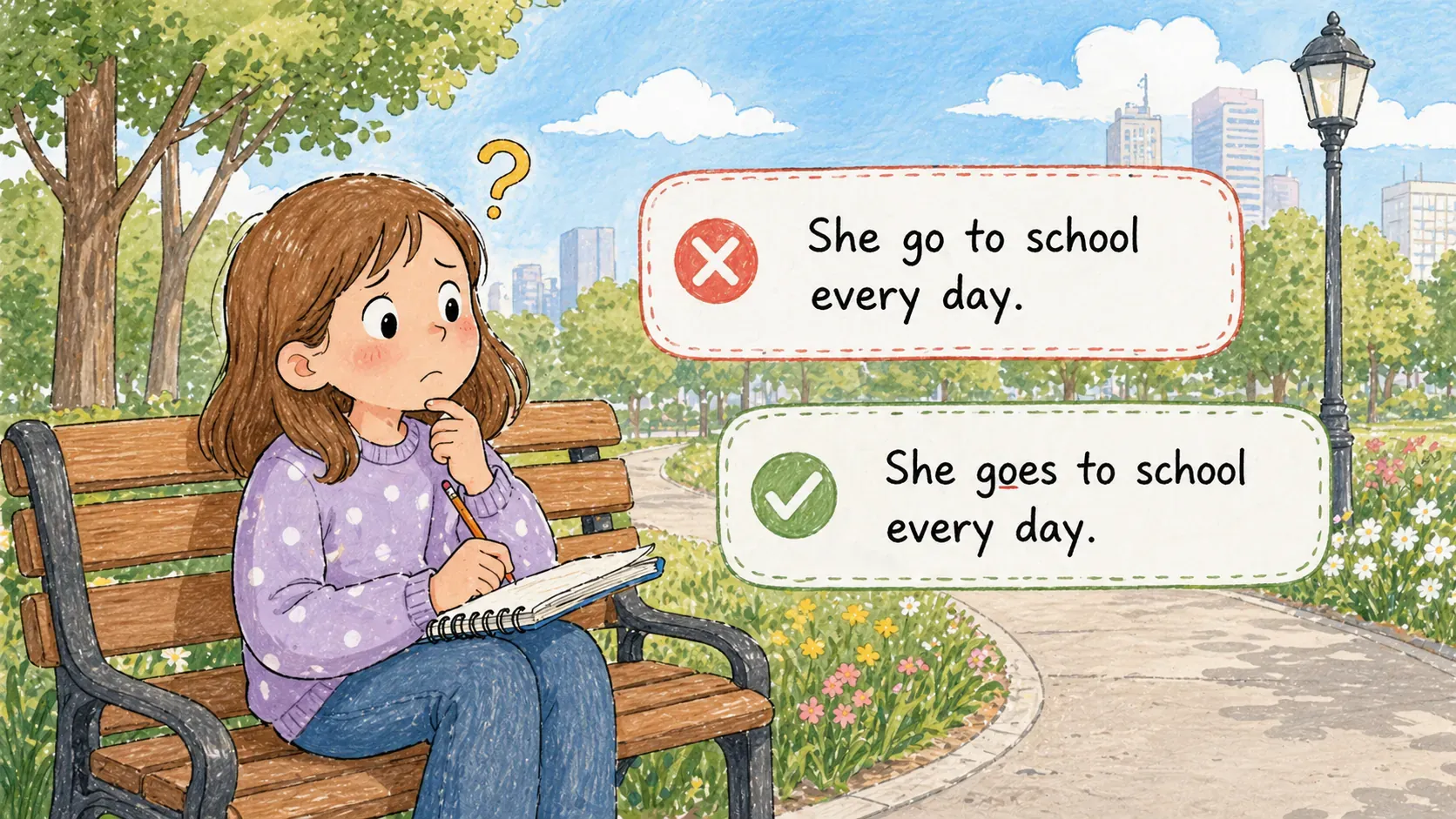
定义: 句子片段指的是只有部分句子(如一个从句、短语或不完整结构),不能单独表达完整意思。这类常见错误会让句子看起来不完整,影响表达的连贯与准确。
很多句子片段源自“以连词(如 because, although, when, if, unless, while, since, after, before 等)引导的从句”单独成句。这些从句本身不具备完整意义,必须附属于一个主句。
常见错误例句:
❌ “Although it was raining heavily.”(片段,需要主句)
✅ “Although it was raining heavily, we decided to go out.”
❌ “Because I was tired.”
✅ “I went to bed early because I was tired.”
❌ “When I finished my homework.”
✅ “When I finished my homework, I watched TV.”
❌ “If you work hard.”
✅ “If you work hard, you will succeed.”
片段易出现的位置:
- 写复合句时,下意识只写“原因”“条件”部分,忘了主句
- 分割长句时误用点号或逗号截断
避免方法:
- 检查句子是否包含“完整主谓结构”,并能表达完整意思
- 对以连词/引导词开头的句子,确保有主句或和前后句合并
- 多读英文原文体会完整句子的结构
错误九:逗号连接两个独立主句(Comma Splice)
定义: Comma Splice 指用一个逗号连接两个独立且完整的句子(主句),这是正式写作中的严重语法错误,容易造成句子结构混乱。
典型错误:
❌ “The movie was long, I fell asleep halfway through.”
改正方法有三种:
-
加并列连词(如 and, but, so, or, yet, for, nor):
✅ “The movie was long, so I fell asleep halfway through.” -
用分号分开主句:
✅ “The movie was long; I fell asleep halfway through.” -
直接分成两个句子:
✅ “The movie was long. I fell asleep halfway through.”
类似错误:
- “I finished my work, then I went home.”
❌ 错误(逗号 splice)
✅ “I finished my work, and then I went home.”
✅ “I finished my work; then I went home.”
✅ “I finished my work. Then I went home.”
避免方法:
- 确认“逗号”前后是否是完整句子,若是,考虑加连接词/分号/句号
- 正式写作尽量避免逗号直接拼接完整句子
错误十:多余的主语代词(Pronoun Redundancy)
定义: 英语中,一个句子的主语只需要出现一次。不能将名词和对应的代词一起重复作为一个主语,否则出现“主语冗余”现象(这在汉语中常见,但英语不能出现)。
为什么会错:
- 汉语中习惯“我妹妹她……”,英语不能这样
- 常见于中英直译,尤其初学者
避免方法:
- 检查句子主语是否重复(名词+代词/两次主语)
- 一律只保留一个主语(名词或代词其一)
小结:牢记主语一次、谓语一次,避免啰嗦与重复,使句子简洁自然。
练习题
练习一(选择题)
知识点:主谓一致 + 冠词
下面哪个句子是正确的?
A. There is a informations you should know.
B. There are some information you should know.
C. There is some information you should know.
D. Informations are important.
练习二(选择题)
知识点:介词搭配
下列哪个介词搭配是正确的?
A. I am very interested about history.
B. She arrived to the city late last night.
C. He is good at solving problems under pressure.
D. We discussed about the project.
练习三(选择题)
知识点:句子片段与逗号连接错误
下列哪个句子是完整且正确的?
A. Although I studied hard. I failed.
B. I studied hard, I still failed.
C. Although I studied hard, I still failed.
D. I studied hard. Although I still failed.
练习四(情景问答)
知识点:综合错误识别与改正
下面这段话中有多处错误,请找出所有错误并改正(至少找出6处),然后写出改正后的完整段落。
原文:“Last week I go to a new restaurant with my friends. The restaurant it was very nice and had a good atmospheres. Although the food was delicious. However the prices was a bit expensive, I think this restaurant is more better than the old one we used to visit. I am interested about the new menu they are planning to launch in March.”
练习五(情景问答)
知识点:自我改稿练习
任务: 请写一段话(5-7句话),描述你的学英语经历(什么时候开始学、遇到过哪些困难、现在的感受),然后检查自己写的内容,根据本章学到的10类错误,找出任何可能存在的问题并自行修改。