写日常生活描述文章
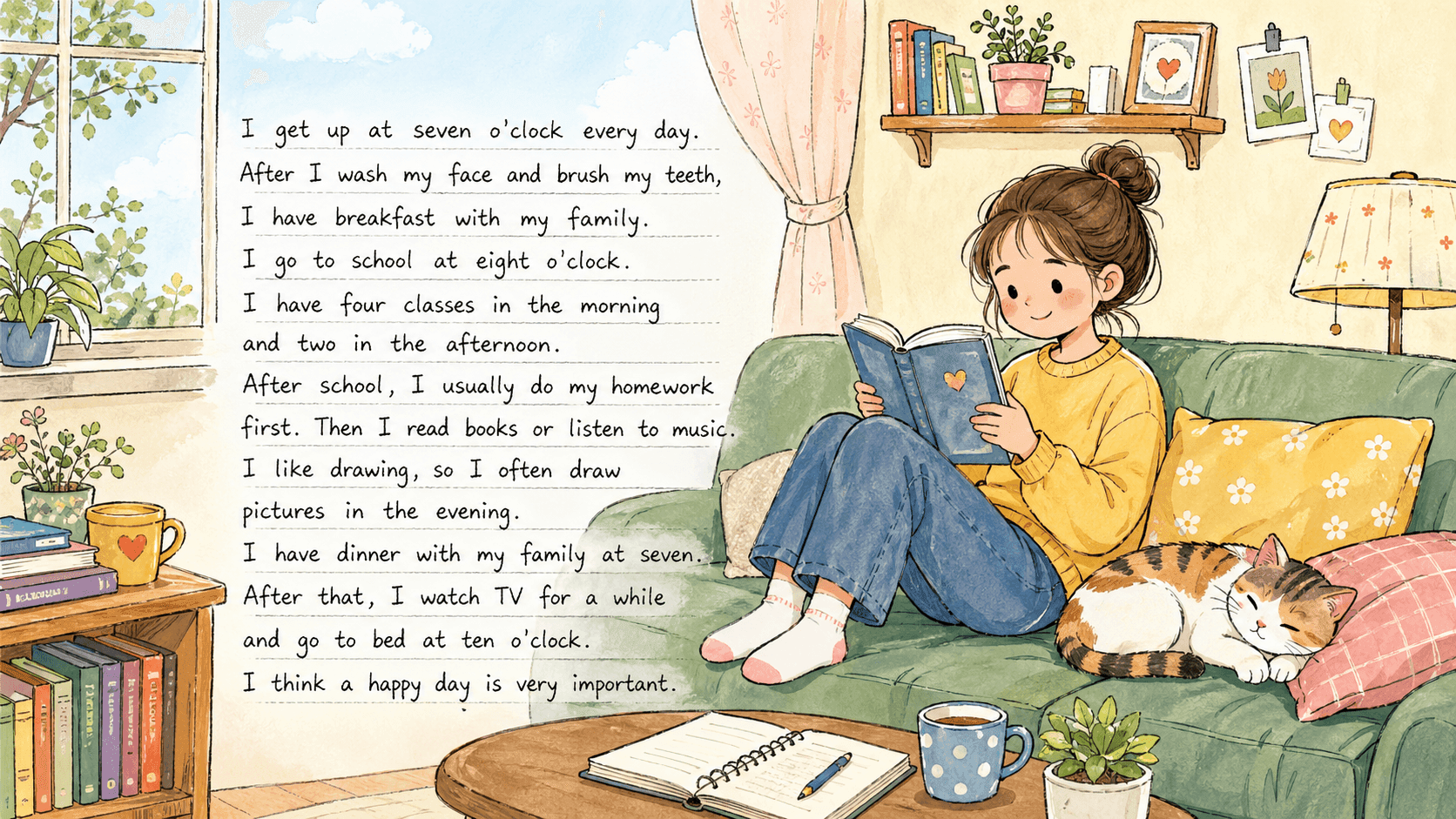
描述日常生活这个主题,看起来平凡,但在英语写作中意义重大。它要求你能灵活切换和组合不同的时态,比如用一般现在时描述习惯性动作,用过去时回忆特殊的经历。这不仅仅是简单地写“我做了什么”,而是要用丰富的词汇巧妙地表达同样的日常活动,让内容既自然生动又不显单调。同时,一个好的日常生活描述,还需要良好的段落结构:比如按照时间顺序铺陈一整天的生活,从清晨起床、上班到傍晚回家休息,或者围绕一个具体场景展开细腻的描写。
不只是简单地罗列事件,更要注重细节描摹、内心感受的穿插,以及日常行为背后的小习惯、独特的个人特点。例如,可以写早晨被窗外的鸟鸣叫醒,早餐的热气腾腾在厨房盘旋,下班路上的微风带来一天中最放松的时刻,这些细节都让文章更具画面感和生活气息。在英语学习中,能把最普通的日常用精准、丰富、有情感的语言描述出来,不仅体现语言能力,更展示了对生活的观察力和表达力。
一般现在时:描述习惯与规律
描述日常习惯和规律时,需使用一般现在时(Simple Present)。这是在英文写作中描述“平时如何”、“每天怎么做”、“长期习惯、普遍事实”的基本时态。比如你要写“我每天早上六点起床”“我通常在家吃晚饭”“他总会在睡前读书”等,这些都应该用一般现在时,因为它们反映的是一种经常性、持续性的动作或状态。
频率副词(频率副词用于 be 动词之后、实义动词之前,表示动作发生频率,使句子更具体有层次。)
“always”— 总是 (如:He is always on time. / He always brushes his teeth before bed.)
“usually / generally”— 通常、一般来说
“often”— 经常
“sometimes”— 有时
“rarely / seldom”— 很少
“never”— 从不(never 后面动词不用否定形式)
这些频率副词可以帮助你细致地表达某个习惯是多频繁发生,比如:
-
I always have a cup of tea after lunch.
(我总是在午饭后喝一杯茶。) -
She usually takes the bus to work.
(她通常乘公交车去上班。) -
We often go jogging in the park.
(我们经常在公园里慢跑。) -
He sometimes forgets his keys.
(他有时会忘记带钥匙。) -
They rarely eat out.
(他们很少在外面吃饭。) -
I never watch TV in the morning.
(我早上从不看电视。)
常用的时间状语短语(进一步丰富句意,指明动作发生的具体时间、频率或周期)
“every morning / evening / weekend”— 每天早晨/每天傍晚/每个周末
“on weekdays”— 在工作日
“at around [时间]”— 大约在[时间]
“once / twice a week”— 每周一次/两次
“from time to time”— 偶尔
“all year round”— 一年到头
“after dinner / before work / during the day”— 晚饭后/上班前/白天
你可以把这些时间短语和频率副词结合使用,让句子更具体生动。例如:
-
I usually get up at around 6:30 every morning.
(我通常每天早上六点半左右起床。) -
My parents often call me on weekends.
(我父母经常在周末给我打电话。) -
She goes to the gym twice a week.
(她每周去健身房两次。) -
We sometimes have coffee together after work. (我们有时下班后会一起喝咖啡。)
通过合理使用一般现在时和这些搭配,日常生活的描述会更真实、丰富,也更加具有英语地道表达的感觉。
示范:描述早晨的习惯
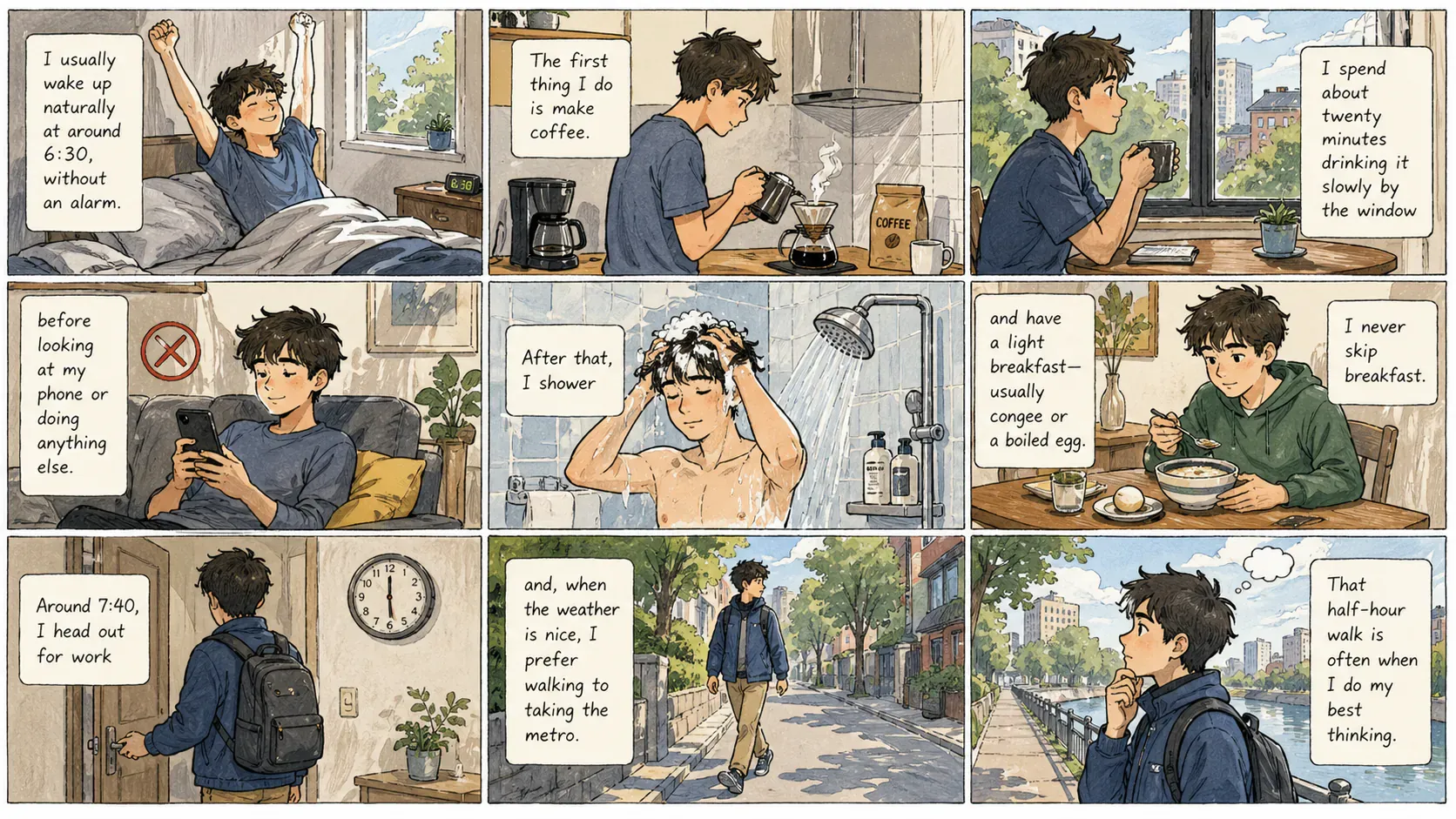
My morning routine is pretty simple, but it genuinely calms me. I usually wake up naturally at around 6:30, without an alarm. The first thing I do is make coffee, and I spend about twenty minutes drinking it slowly by the window before looking at my phone or doing anything else. This small ritual helps set a calm tone for the day. After that, I shower and have a light breakfast—usually congee or a boiled egg. I never skip breakfast. Around 7:40, I head out for work and, when the weather is nice, I prefer walking to taking the metro. That half-hour walk is often when I do my best thinking.
(我的早晨日程很简单,但我发现它真的让我平静。我通常在6点半左右自然醒,不用闹钟。第一件事是煮咖啡,在看手机或做别的事之前,会在窗边慢慢喝二十分钟左右。这个小仪式为一天定下平静的基调。之后我会淋浴,吃一顿简单的早餐——通常就是粥或水煮蛋。我从不跳过早餐。大约7:40出发去上班,天气好的时候我更愿意走路而不是坐地铁。那半小时的散步常常是我思考最清楚的时间。)
描写“一天”:时态的转换与切换
在英语写作中,描述“一天”时要注意时态的选择。如果你在讲述自己的日常习惯,需要用一般现在时(Present Simple)。但是一旦你转向回忆某一天真实发生的事情,无论是昨天、上周、还是某次特定经历,都要切换到过去时(Past Tense)。
比如:
- 当说到你每天的习惯时,用一般现在时:
“I usually commute to work by metro. On busy days, I sometimes stop at a coffee shop on the way and pick up a flat white.”
(我通常乘地铁去上班。忙的时候,我有时会在路上的咖啡馆停一下,买一杯馥芮白。)
- 如果你在回忆某一天的具体经历,则要用过去时:
“Yesterday, I had an unusually long commute. I took the metro, but there was a signal delay on Line 2, so the journey took nearly an hour. By the time I got to the office, I was already a bit behind schedule.”
(昨天,我的通勤时间异常漫长。我坐了地铁,但2号线出现信号延误,所以全程花了将近一个小时。等我到办公室时,已经有点晚了。)
更多说明和例子:
如果你用“every day / always / usually / sometimes / often / never”等词,通常是在表达习惯——用一般现在时。
如果出现“yesterday / last night / a week ago / just now / that day”等时间状语,通常在描述具体已经发生的事情——用一般过去时。
拓展例句:
- 一般现在时(习惯描述)
“I always drink a glass of water after I wake up.”
(我每天起床后总会喝一杯水。)
“She usually brings her lunch from home.”
(她通常自己带午饭。)
- 一般过去时(具体经历)
“Last Friday, I forgot my umbrella and got caught in the rain on my way home.”
(上周五,我忘带伞了,回家路上被雨淋了。)
“This morning, I arrived at work earlier than usual because I had an important meeting.”
(今天早上我比平常早到公司,因为有个重要会议。)
写日常生活时,先判断你是在说“经常发生的现象”还是“某一天具体的事情”,然后正确切换时态。用时态变化来让你的描述清晰、自然、有条理。
生动描写的技巧
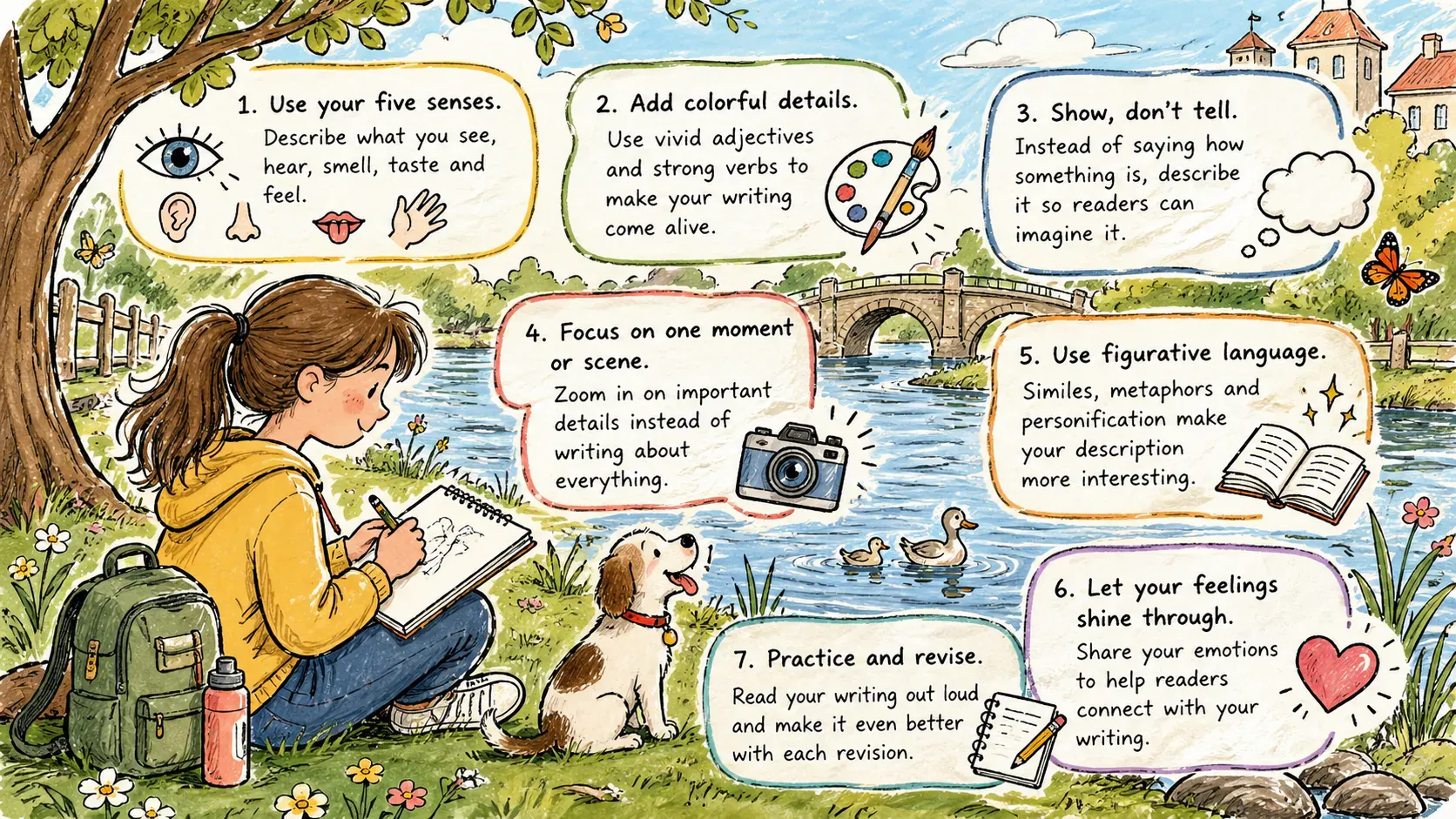
日常生活文章最容易写得平淡无味,因为你在描述的都是别人也经历过的事。让文章有个性、有生命力的技巧:
技巧一:用感官细节
不只说“我坐在公园里”,说“我坐在公园里,阳光把鞋面晒得有些烫,远处有人在练太极”:
“I sat on a bench in the park, the warm afternoon sun hitting my face and making it hard to keep my eyes fully open. Somewhere nearby, a group of elderly men were playing chess, and the faint clacking of tiles was the only sound apart from the birds.”
(我坐在公园的长椅上,温暖的下午阳光照在我的脸上,让我几乎睁不开眼。在附近某处,一群老人正在下棋,除了鸟鸣,只有棋子的轻微碰撞声。)
技巧二:加入一点内心感受
日常事件 + 你当时的内心状态,会让文章更有真实感:
“I got home later than expected and realized I'd forgotten to thaw the meat for dinner. For a moment I just stood there in the kitchen, too tired to be annoyed, too hungry to think straight. I ended up ordering takeout and telling myself I'd be more organized tomorrow — which I knew was probably a lie.”
(我回家比预期晚,才发现自己忘了解冻晚餐要用的肉。有那么一刻,我就呆站在厨房里,太累了,懒得生气,也饿到无法思考。最后我点了外卖,还一边安慰自己明天会更有条理——其实我心里也知道,这大概只是自我安慰而已。)
技巧三:注意节奏感
描述快速的事情用短句,描述悠闲的事情用长句:
“I ran. Down the stairs, through the lobby, out onto the street. The taxi was right there, engine running.” (我奔跑着。冲下楼梯,穿过大厅,冲到街上。出租车就在那儿,发动机已经启动。)(快速逃亡感)
“After dinner, I took my time washing up, listening to a podcast playing softly from my phone propped up against the soap dispenser, and watching the sky outside the kitchen window shift from pale orange to deep purple.” (晚饭后,我不慌不忙地洗碗,一边听着手机靠在洗手液瓶上轻声播放的播客,一边望着厨房窗外的天空从浅橙色渐渐变成深紫色。) (悠闲的傍晚感)
示范段落:描写一个有代表性的工作日
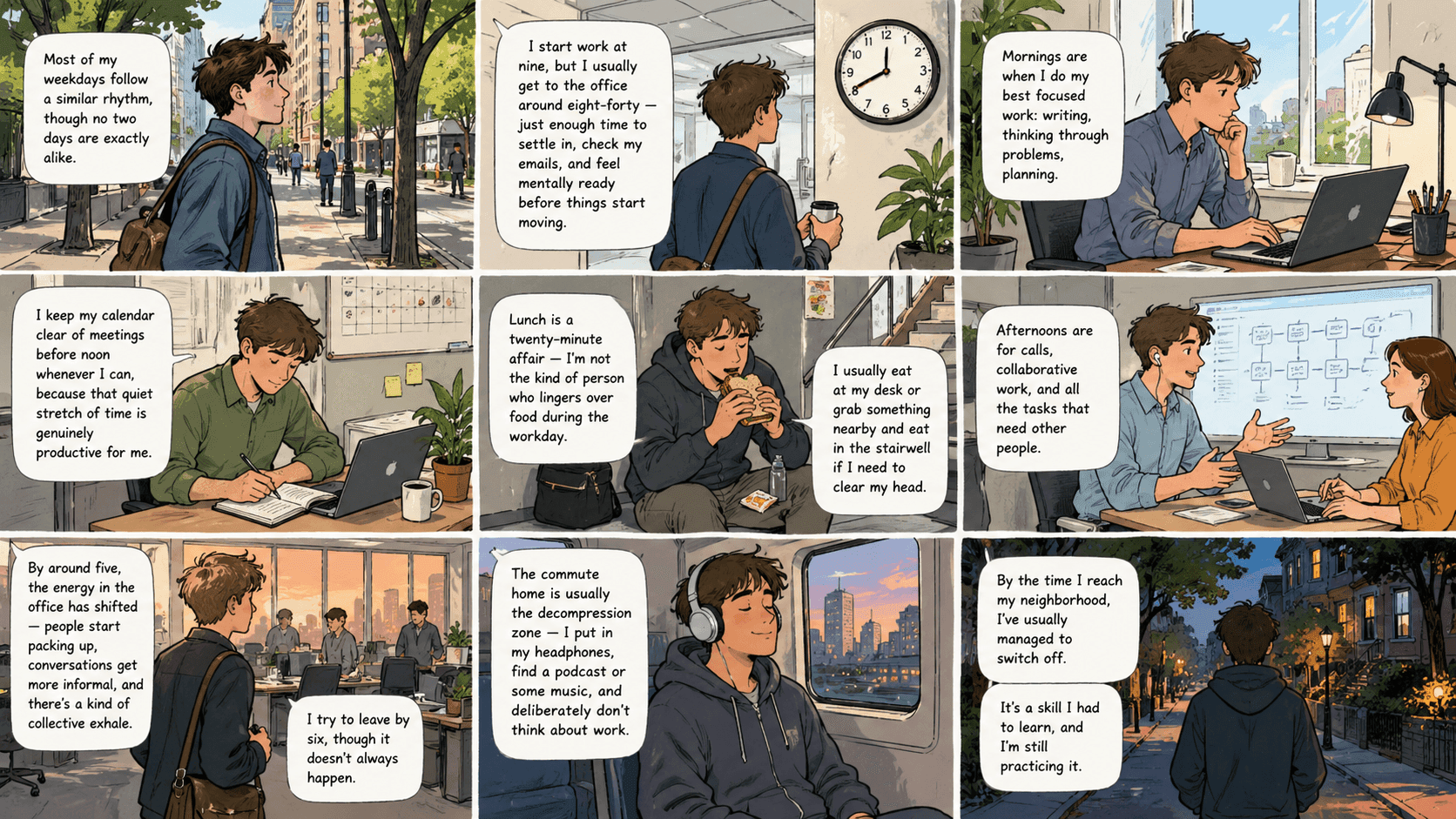
Most of my weekdays follow a similar rhythm, though no two days are exactly alike. I start work at nine, but I usually get to the office around eight-forty — just enough time to settle in, check my emails, and feel mentally ready before things start moving. Mornings are when I do my best focused work: writing, thinking through problems, planning. I keep my calendar clear of meetings before noon whenever I can, because that quiet stretch of time is genuinely productive for me.
Lunch is a twenty-minute affair — I'm not the kind of person who lingers over food during the workday. I usually eat at my desk or grab something nearby and eat in the stairwell if I need to clear my head. Afternoons are for calls, collaborative work, and all the tasks that need other people. By around five, the energy in the office has shifted — people start packing up, conversations get more informal, and there's a kind of collective exhale.
I try to leave by six, though it doesn't always happen. The commute home is usually the decompression zone — I put in my headphones, find a podcast or some music, and deliberately don't think about work. By the time I reach my neighborhood, I've usually managed to switch off. It's a skill I had to learn, and I'm still practicing it.
(我大多数工作日都遵循着类似的节奏,尽管没有两天是完全相同的。我九点开始工作,但通常八点四十左右到办公室——刚好够安顿下来,检查邮件,在事情开始运转之前让自己在精神上做好准备。早上是我做最好的专注工作的时候:写作、思考问题、计划。只要可以,我会在中午之前保持日历没有会议,因为那段安静的时间对我来说真的很有成效。午饭是二十分钟的事——我不是那种在工作日里慢悠悠吃饭的人。我通常在桌子上吃,或者拿了东西在楼梯间吃,如果需要清理一下思路的话。下午是打电话、协同工作,以及所有需要其他人配合的任务。到了大约五点,办公室的能量已经转变了——人们开始收拾,对话变得更随意,有一种集体松一口气的感觉。我尽量六点前离开,尽管这并不总能实现。回家的通勤通常是减压区——我戴上耳机,找一个播客或一些音乐,刻意不去想工作。等到了我住的街区,我通常已经设法切换状态了。这是一个我必须学习的技能,而我仍在练习中。)
练习题
练习一(选择题)
知识点:一般现在时与过去时的使用场景
下列哪个句子使用了正确的时态?
A. I usually woke up at 7 and went for a jog every morning.
B. I usually wake up at 7 and go for a jog every morning.
C. I usually wake up at 7 and went for a jog every morning.
D. I usually woken up at 7 and go for a jog.
练习二(选择题)
知识点:感官细节的使用
你在描述一个雨天的早晨走路去上班。哪个句子描述最生动?
A. It was raining and I was wet.
B. It rained a lot and I got very wet on the way to work.
C. The rain had been falling steadily all morning, and by the time I reached the office, my shoes were soaked through and my coat was dripping on the floor of the elevator.
D. I walked to work in the rain. It was unpleasant.
练习三(选择题)
知识点:用短句表达快节奏,用长句表达慢节奏
你想描述下班后回到家、放松下来的感觉。下面哪种写法的节奏感最合适?
A. I came home and changed and sat down and had dinner and watched TV and went to bed.
B. I got home. Took off my coat. Kicked off my shoes. Breathed.
C. After finally getting home, I slowly changed into something comfortable, put on the kettle, and spent a quiet hour in the kitchen listening to the rain outside while dinner simmered on the stove — one of those evenings where time seems to slow down just enough to let you catch your breath.
D. Home. Tired. Sleep.
练习四(情景问答)
知识点:描写日常习惯段落(一般现在时)
情境: 请用英语写一段话(7-9句话),描述你的“下班后到睡前”的日常习惯,包含感官细节,用一般现在时,体现你的个人特点和生活方式。
练习五(情景问答)
知识点:描写某个具体的一天(过去时)
情境: 请用英语写一段话(7-9句话),描述你最近一个让你觉得“这一天过得很充实/很特别”的日子(可以是工作日或周末),用过去时,加入具体的细节和你的内心感受。