高频社会话题讨论
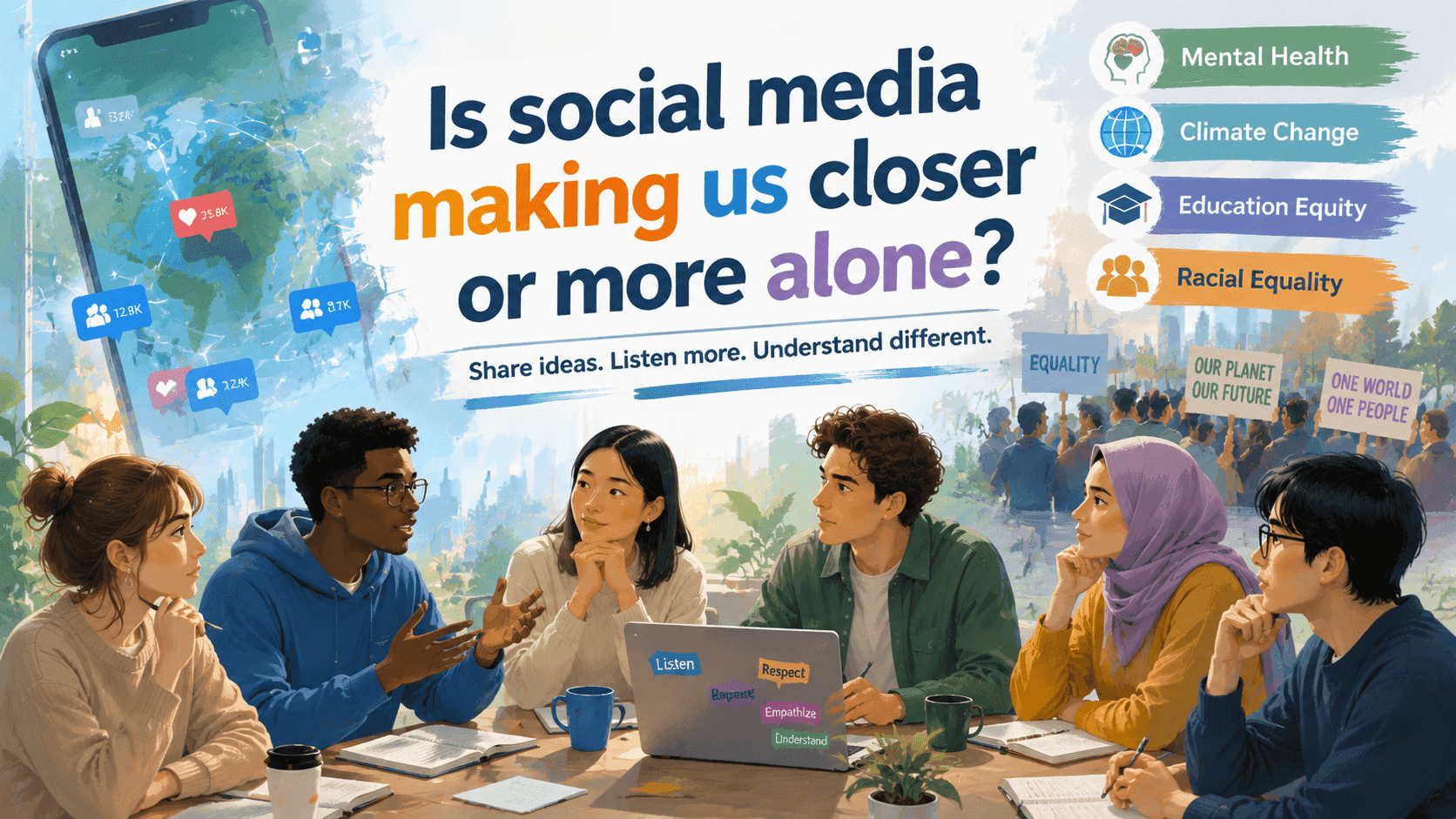
面对一个自己并不熟悉的话题时,能够用英语自如地参与讨论,是很多学习者的目标。实际上,这种能力并不是完全依赖临场思考,而是建立在大量的准备和结构梳理之上。如果缺乏清晰的讨论思路,哪怕单词和语法能力再好,也很难展开条理清楚、观点鲜明的表达。
讨论通常需要“搭建框架”,比如思考碰到某个主题时,如何开头、哪些内容可以作为支撑、用什么顺序安排观点等。词汇提供表达的“基础材料”,常见的论点和反对意见则让内容更丰富,而多样的句型和表达方式可以帮助逻辑衔接更加流畅。通过反复积累和练习这些元素,讨论时会更有底气和条理,可以从容应对各类话题和不同的讨论环境。
高效的英文讨论不仅仅是“把话说出来”,而是要能够清晰地表达立场、合理地组织观点、并且能顺畅地与他人互动。这就要求既能快速理解对方表达的意思,也能灵活应对交流中出现的各种情况,比如表达疑问、补充、转折、总结和邀请他人发言等。当这些能力逐步掌握之后,无论是在课堂、职场还是日常生活,都能更自信地与他人交流观点,参与有深度的对话。
话题一:科技与社会
科技话题是英语讨论中出现频率最高的领域之一,涵盖人工智能、社交媒体、数据隐私、屏幕时间、自动化等子话题。随着科技的发展,这些主题越来越成为日常学习、生活和工作中的热门话题。面对这类话题,除了要理解技术本身,也需要关注它对社会结构、人与人关系以及伦理道德的深远影响。讨论时,通常可以从“科技带来的便利和创新”入手,再进一步探讨“科技的代价和潜在风险”,形成正反两面的论述框架,这样能让你的观点更加全面和深入。
支持科技发展的常见观点包括:
-
Technology has dramatically improved efficiency and access to information — things that used to take days now happen in seconds. 科技极大地提升了效率和信息获取——过去需要几天完成的事情现在几秒就能完成。
-
Digital tools have democratized education, giving people in remote areas access to world-class learning resources. 数字工具让教育变得更加普及,使偏远地区的人也能接触到世界一流的学习资源。
除此之外,还可以补充,科技促进了医疗进步、交通便利和全球协作,让人们的生活变得更加便捷和高效。
对科技发展持保留态度的常见观点包括:
-
The rise of algorithms and data collection raises serious concerns about privacy — we often don't know what information companies hold about us.
算法与数据收集的兴起引发了对隐私的严重担忧——我们经常并不知道公司掌握了哪些我们的信息。 -
Automation is creating a digital divide — those who are tech-savvy thrive, while those without digital skills are increasingly left behind.
自动化正在加剧数字鸿沟——懂技术的人受益,而缺乏数字技能的人则越来越被甩在后面。
此外,还可以提及网络成瘾、青少年心理健康问题、以及科技对传统行业和岗位的冲击等负面影响,这些都是欧美社会讨论中的重要议题。
下面是一组讨论范例,有助于理解如何围绕科技话题展开多角度交流:
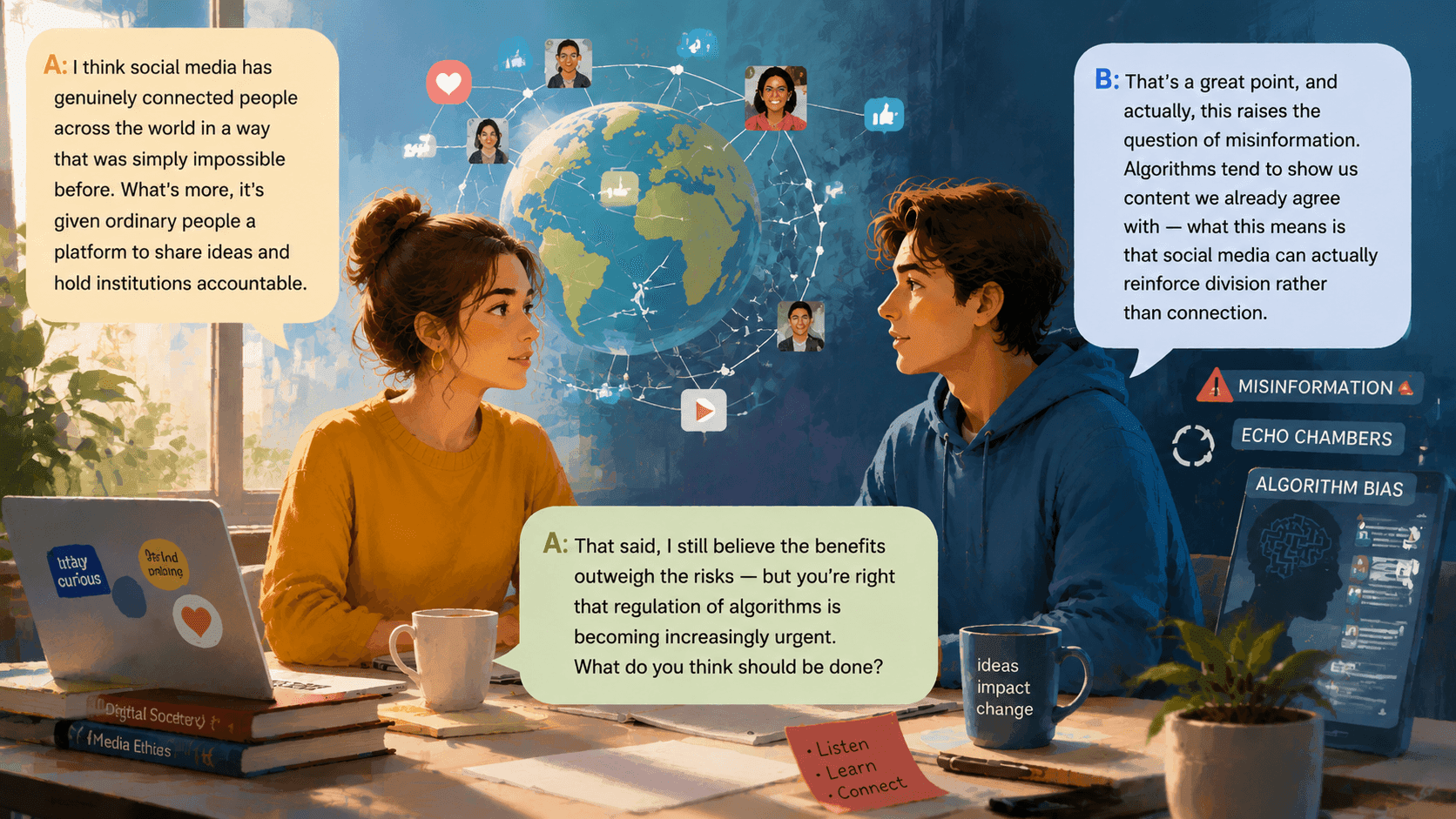
A: I think social media has genuinely connected people across the world in a way that was simply impossible before. What's more, it's given ordinary people a platform to share ideas and hold institutions accountable.
我认为社交媒体真的以一种以前根本不可能的方式将世界各地的人们连接起来。更重要的是,它给了普通人一个分享想法、让机构承担责任的平台。
B: That's a great point, and actually, this raises the question of misinformation. Algorithms tend to show us content we already agree with — what this means is that social media can actually reinforce division rather than connection.
这个观点很好,事实上,这引出了错误信息的问题。算法倾向于向我们展示我们已经同意的内容——这意味着社交媒体实际上可能加剧分裂而非促进连接。
A: That said, I still believe the benefits outweigh the risks — but you're right that regulation of algorithms is becoming increasingly urgent. What do you think should be done?
话虽如此,我仍然认为好处大于风险——但你说得对,对算法的监管变得越来越迫切。你认为应该怎么做?
扩展讨论时,还可以深入探讨以下问题:
- 科技如何影响代际关系、文化认同及社会公平?
- 你是否认为技术的发展应该被更严格地监管?
- 在享受科技便利的同时,如何保护个人隐私?
- “数字鸿沟”下不同行业、不同群体如何平等获得新机会?
这些扩展视角有助于让你的讨论既具备结构性,又具备批判性思维,让你的观点在正式英语交流中显得更有深度和多维度。
话题二:环境与可持续发展
气候变化和可持续发展是全球性议题,在英语讨论中越来越常见,尤其在职场和学术场合。这一话题覆盖面广,不仅关乎生态环境本身,也关涉到经济转型、社会结构变化以及个人生活方式的调整。讨论中,常见的框架通常围绕“问题的严峻性”“解决方案的层次(个人/企业/政府)”“行动的紧迫性”等维度展开。同时,推动绿色发展、减少碳排放,已成为国际社会广泛共识,越来越多的企业和组织也在积极落实可持续发展的目标。
支持激进气候行动的常见观点包括:
The science is clear — we need to drastically reduce our reliance on fossil fuels within the next decade if we want to avoid the worst effects of climate change.
科学证据非常明确——如果我们想要避免气候变化带来的最严重后果,未来十年内我们必须大幅减少对化石燃料的依赖。
Transitioning to a green economy isn't just an environmental choice — it's also a huge economic opportunity.
向绿色经济转型不仅仅是环境保护的选择——它同时也是一个巨大的经济机遇。
观点强调气候变化的科学共识,认为要避免灾难性后果必须立即采取大规模行动,并且实现绿色经济转型有助于创造新的就业机会,促进创新发展。
相对持保留态度的观点则指出:
While climate action is crucial, we need to consider the economic impact on developing countries that still rely heavily on fossil fuels for growth.
气候行动固然重要,但我们需要考虑那些仍然高度依赖化石燃料以推动经济增长的发展中国家的经济影响。
Individual choices matter, but systemic change — through corporate and government policy — is what will make the real difference.
个人选择固然重要,但真正产生重大影响的,是通过企业和政府政策实现的体制性变革。
另外,内容更关注社会公平与发展中国家的现实处境,主张应综合考虑环境、经济和社会多重目标,强调体制改革的关键作用。
在实际的英语讨论中,你可能会遇到如下对话:
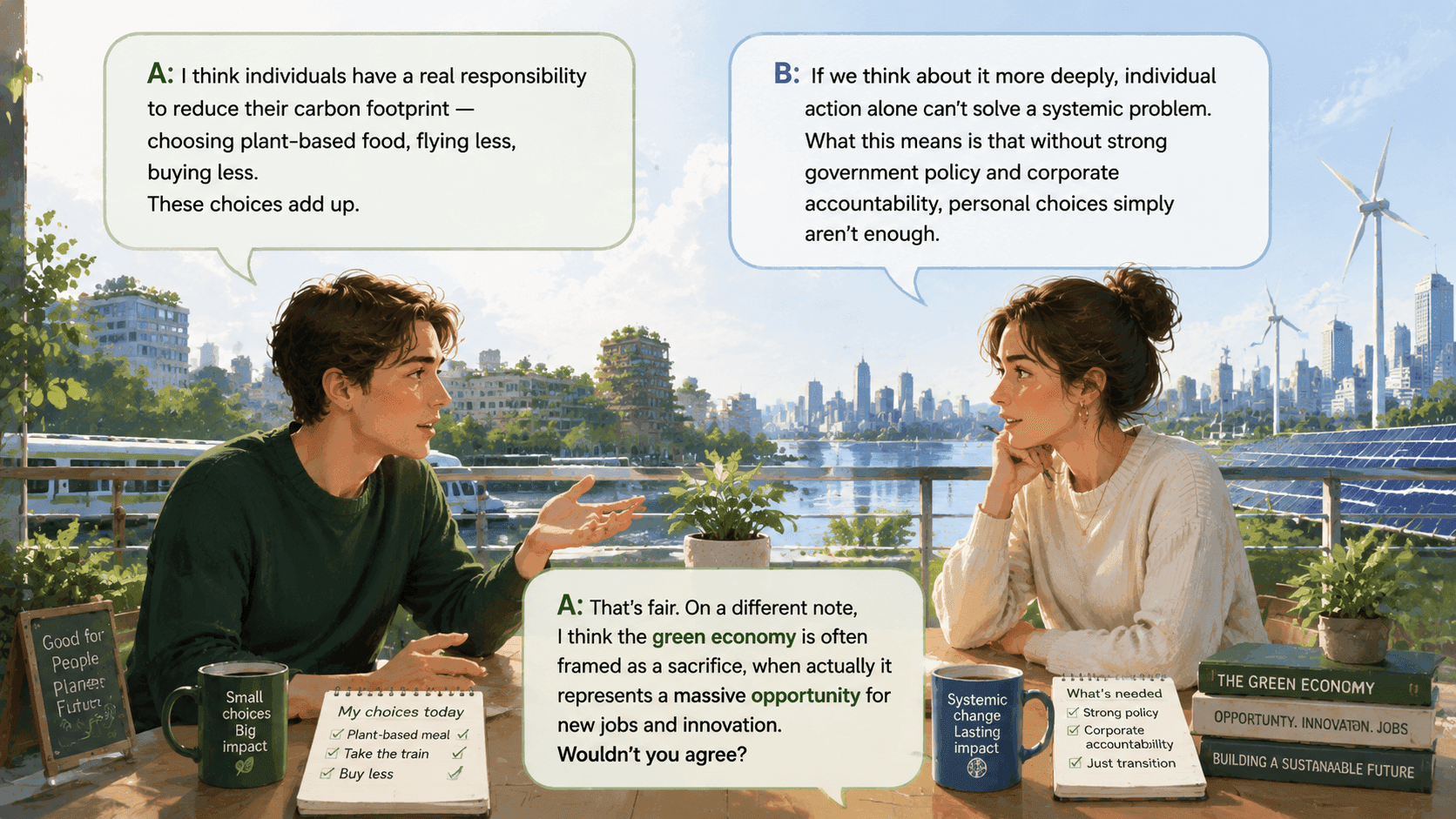
A: I think individuals have a real responsibility to reduce their carbon footprint — choosing plant-based food, flying less, buying less. These choices add up.
我认为个人有真正的责任来减少他们的碳足迹——选择植物性食物、少飞行、少购买。这些选择会积少成多。
B 的回应则深入到了个人与系统层面的关系:
B: If we think about it more deeply, individual action alone can't solve a systemic problem. What this means is that without strong government policy and corporate accountability, personal choices simply aren't enough.
如果我们深入思考,单靠个人行动无法解决一个系统性问题。这意味着,如果没有强有力的政府政策和企业问责制,个人选择根本不够。
接着,A 提出绿色经济转型的机会视角:
A: That's fair. On a different note, I think the green economy is often framed as a sacrifice, when actually it represents a massive opportunity for new jobs and innovation. Wouldn't you agree?
说得有道理。换一个角度,我认为绿色经济常常被框架为一种牺牲,而实际上它代表了新工作和创新的巨大机会。你不这样认为吗?
在扩展讨论时,还可以涉及以下问题:
- 绿色技术、可再生能源(如太阳能、风能)对未来社会和就业市场将带来哪些具体改变?
- 企业在推动可持续发展中应该承担什么样的社会责任?绿色金融与投资有哪些新趋势?
- 如何实现发达国家与发展中国家的公平转型与国际合作?
- 除了气候变化本身,资源循环利用、垃圾分类等小切口如何影响我们的日常生活?
这些扩展角度有助于使你的讨论更具层次感和国际视野,也能够展现结构性与批判性思考能力。
话题三:教育与学习
教育话题在英语讨论中往往围绕“在线教育与传统教育”“技能型教育与学历教育”“批判性思维的培养”“素质教育与应试教育”等方向展开。这个话题和学习者自身的经历高度相关,往往容易产出个人化、有感情的发言。除此之外,教育公平、技术进步对教育形态的影响(如人工智能辅助教学)、以及国际交流与留学也常常成为深入讨论的切入点。
支持技能型教育的常见观点:
In many fields, practical skills and a strong portfolio matter far more to employers than a prestigious degree.
在许多领域,实际技能和出色的作品集对雇主来说比名校学历更重要。
The rise of online learning means anyone with internet access can now develop professional skills — academic credentials are no longer the only path.
在线学习的兴起意味着任何有网络的人都可以提升专业技能——学历已经不是唯一的途径。
Vocational education prepares students directly for the job market and helps address skills gaps in the economy.
职业教育让学生直接为就业市场做好准备,同时有助于解决经济中的技能短缺问题。
支持传统学历教育的常见观点:
University education isn't just about knowledge — it's about developing critical thinking, building networks, and learning how to learn.
大学教育不仅仅是获取知识——更重要的是培养批判性思维、建立人脉,并学会如何学习。
In many industries, a degree is still a basic entry requirement — dismissing academic credentials can leave people at a structural disadvantage.
在许多行业,学位仍然是基本的入门门槛——如果忽视学历资质,可能会让人处于结构性的劣势。
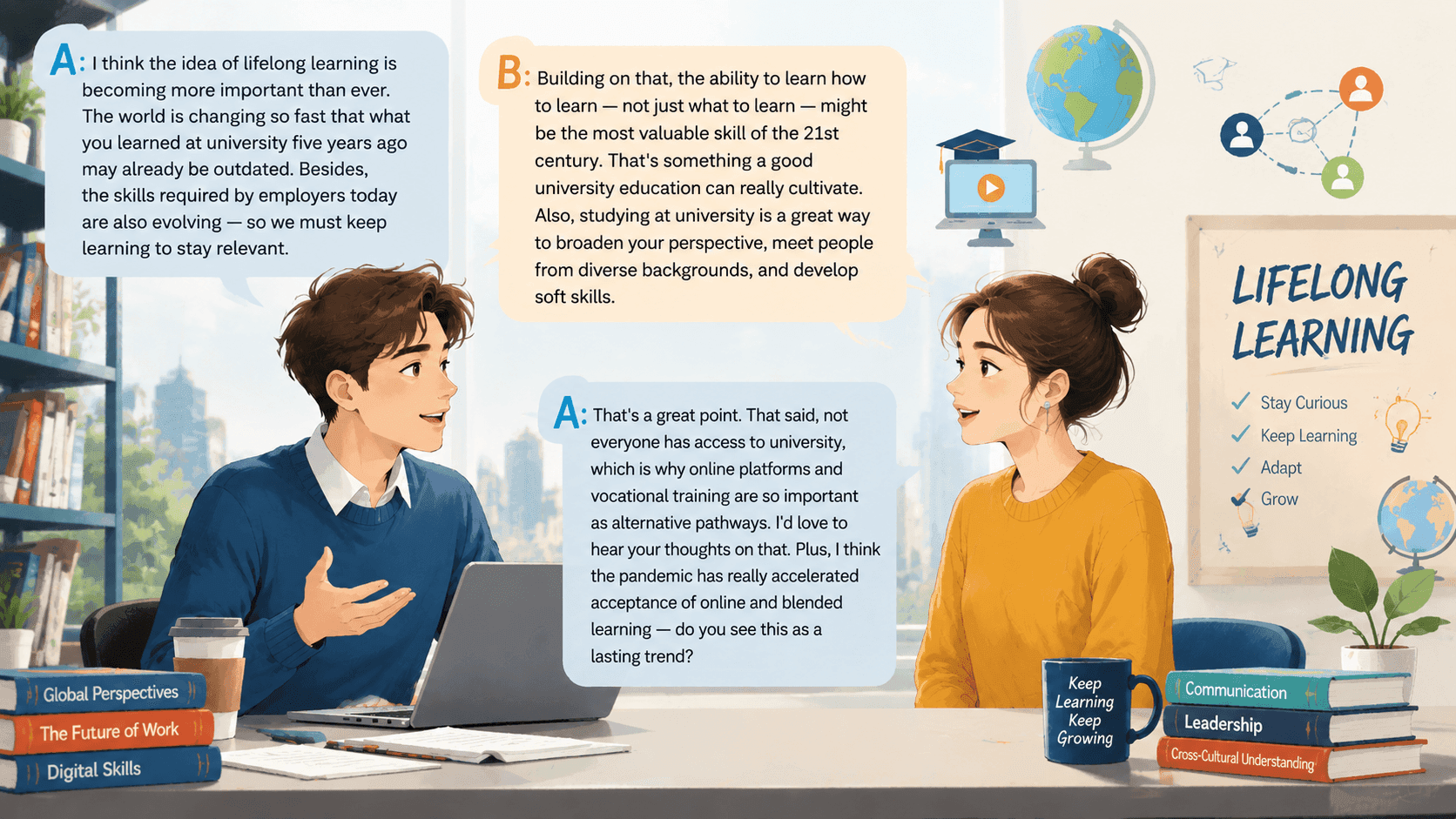
A: I think the idea of lifelong learning is becoming more important than ever. The world is changing so fast that what you learned at university five years ago may already be outdated. Besides, the skills required by employers today are also evolving — so we must keep learning to stay relevant.
我认为终身学习的理念比以往任何时候都更重要。世界变化如此之快,五年前在大学学到的东西可能已经过时了。而且,如今雇主对技能的要求也在不断变化——我们必须持续学习,才能保持竞争力。
B: Building on that, the ability to learn how to learn — not just what to learn — might be the most valuable skill of the 21st century. That's something a good university education can really cultivate. Also, studying at university is a great way to broaden your perspective, meet people from diverse backgrounds, and develop soft skills.
在此基础上,学会如何学习的能力——而不仅仅是学什么——可能是21世纪最有价值的技能。这是一个好的大学教育真正能够培养的东西。此外,在大学学习也有助于开阔视野,结识来自不同背景的人,并发展软技能。
A: That's a great point. That said, not everyone has access to university, which is why online platforms and vocational training are so important as alternative pathways. I'd love to hear your thoughts on that. Plus, I think the pandemic has really accelerated acceptance of online and blended learning — do you see this as a lasting trend?
这个观点很好。话虽如此,并不是每个人都能上大学,这就是为什么网络平台和职业培训作为替代途径如此重要。我很想听听你对此的想法。另外,我觉得疫情确实加速了大家对线上和混合学习的接受度——你认为这会成为一个长期趋势吗?
在实际英语交流或辩论中,还可围绕教育公平、教育体制创新、科技对学习方式的改变(如AI智能辅导、MOOC等)以及国际视野的培养进行深入探讨。例如:
- 技术如何帮助偏远或贫困地区获得更优质的教育资源?
- 实践技能与批判性思维,哪一个在当今社会更重要?
- 高等教育普及是否会导致“学历贬值”?我们该如何应对?
- 不同国家或文化下教育理念有何异同?如何借鉴先进经验?
这些角度会让讨论更加全面且有深度,彰显个人思辨能力和国际化视野。
话题四:工作与生活
工作与生活的平衡、远程工作、职业发展、职场文化以及个人成长,这些话题在英语职场交流和日常讨论中极为普遍,也是每个学习者都有亲身体验的领域,容易说出有深度、有个人视角的内容。在日常面试、会议、小组讨论、甚至轻松的办公室闲谈中,这些话题都可能出现,也是展现沟通能力和思辨能力的好机会。
常见支持工作生活平衡的观点包括:
-
Burnout is a real productivity killer — employees who have time to rest and recharge are more creative and effective in the long run.
职业倦怠是真正影响生产力的杀手——有时间休息和恢复的员工,从长远来看会更有创造力、更高效。 -
The pandemic forced many companies to adopt remote work, and the data shows it often improves both productivity and employee satisfaction.
疫情迫使许多公司采用远程办公,而数据显示这种方式通常能提升生产力和员工满意度。
而对工作生活平衡持不同看法的人则认为:
-
In highly competitive industries, some level of hustle culture is just the reality — if you want to advance, you have to be willing to put in the hours.
在竞争激烈的行业中,一定程度的加班文化其实是现状——如果你想要晋升,就必须愿意投入时间。 -
Remote work blurs the boundary between home and office, which can actually make it harder to truly disconnect and rest.
远程办公模糊了家庭和办公室的界限,这实际上可能让人更难真正放松和休息。
还有人担心远程办公让团队协作和归属感变弱,对于某些性格的人来说可能带来孤独感。多样化的观点能帮助你在讨论时展现出对不同立场的理解和包容,也容易与他人建立共鸣。
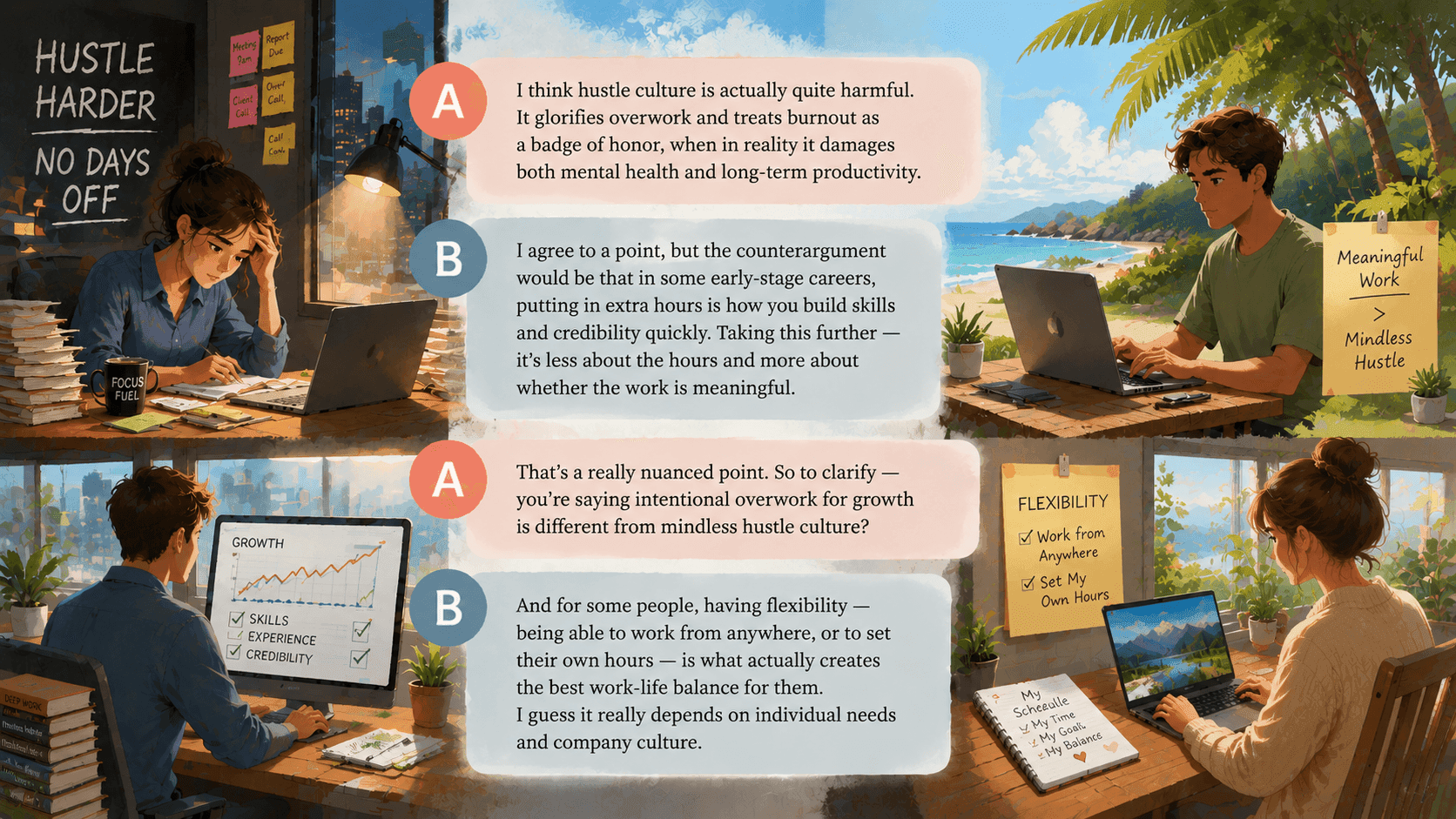
A: I think hustle culture is actually quite harmful. It glorifies overwork and treats burnout as a badge of honor, when in reality it damages both mental health and long-term productivity.
我认为加班文化实际上相当有害。它美化过度工作,把职业倦怠当作荣誉徽章,而实际上它损害了心理健康和长期生产力。
B: I agree to a point, but the counterargument would be that in some early-stage careers, putting in extra hours is how you build skills and credibility quickly. Taking this further — it's less about the hours and more about whether the work is meaningful.
我在一定程度上同意,但反面论点是,在一些早期职业生涯中,投入额外的时间是快速积累技能和可信度的方式。进一步说——问题不在于工作时长,而在于工作是否有意义。
A: That's a really nuanced point. So to clarify — you're saying intentional overwork for growth is different from mindless hustle culture?
这是一个非常有细节的观点。那我来确认一下——你是说有目的的为了成长而多付出,与盲目的加班文化是不同的?
B: And for some people, having flexibility — being able to work from anywhere, or to set their own hours — is what actually creates the best work-life balance for them. I guess it really depends on individual needs and company culture.
对于有些人来说,拥有灵活性,比如可以远程办公或自己安排时间,才是真正实现工作与生活平衡的关键。所以最终还是取决于个人需求和公司文化。
话题五:文化与多元化
全球化、文化保护、跨文化交流等议题考验学习者对文化议题的敏感度和表达的分寸感。这些话题往往关系到价值观与社会热点,讨论时措辞需要比其他话题更加谨慎,既要表达个人观点,又要尊重不同文化背景的参与者。在国际工作环境、留学生活、旅行体验等语境中均极为常见。
| 主题/Theme | 英文 | 中文 | 例句 | 翻译 |
|---|---|---|---|---|
| Cultural Identity | cultural identity | 文化认同 | Maintaining one's cultural identity is important. | 保持文化认同非常重要。 |
| Globalization | globalization | 全球化 | Globalization spreads new ideas but can threaten traditions. | 全球化传播新观念,也可能威胁本地传统。 |
| Cultural Preservation | cultural preservation | 文化保护 | It helps ancient customs and languages survive. | 文化保护让古老习俗和语言得以传承。 |
| Cross-cultural Communication | cross-cultural communication | 跨文化交流 | These skills are essential in international workplaces. | 跨文化交流能力在国际工作中很重要。 |
| Cultural Homogenization | cultural homogenization | 文化同质化 | Fast food chains worldwide show cultural homogenization. | 快餐连锁店全球普及就是文化同质化例子。 |
| Diversity & Inclusion | diversity and inclusion | 多元与包容 | Diverse teams are often more innovative. | 多元包容的团队更有创新力。 |
| Multicultural Environment | multicultural environment | 多元文化环境 | Such environments broaden your perspective. | 多元文化环境能拓宽视野。 |
支持全球化与文化交流者认为:
Globalization has allowed people to experience diverse foods, music, art, and ideas — this cross-cultural exchange enriches everyone.
全球化让人们有机会体验多样的美食、音乐、艺术和思想——这种跨文化交流让每个人都受益。
In international workplaces, the ability to communicate across cultural boundaries is one of the most valuable professional skills.
在国际化的职场中,能够跨越文化界限进行沟通是最宝贵的职业技能之一。
而对文化同质化表示担忧的人则会说:
Globalization risks erasing local languages and traditions — when a language dies, an entire way of seeing the world disappears with it.
全球化有可能导致本地语言和传统的消失——当一种语言消亡时,一整套独特的世界观也随之消失。
There's a difference between cultural exchange and cultural appropriation — context and power dynamics matter enormously.
文化交流和文化挪用之间是有区别的——语境与权力关系非常重要。
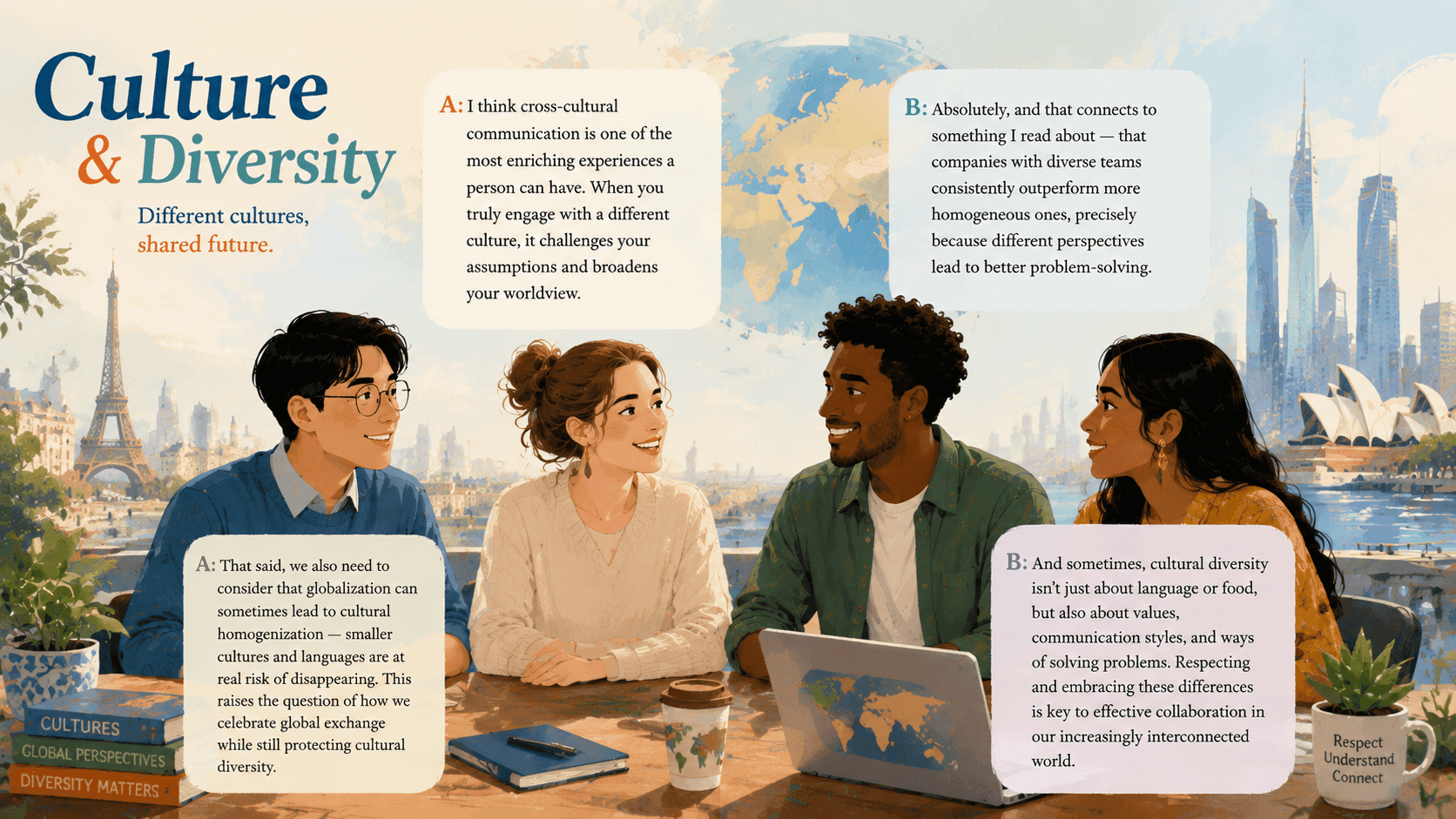
A: I think cross-cultural communication is one of the most enriching experiences a person can have. When you truly engage with a different culture, it challenges your assumptions and broadens your worldview.
我认为跨文化交流是一个人能拥有的最丰富的经历之一。当你真正接触一种不同的文化时,它会挑战你的假设,拓宽你的世界观。
B: Absolutely, and that connects to something I read about — that companies with diverse teams consistently outperform more homogeneous ones, precisely because different perspectives lead to better problem-solving.
完全同意,这联系到我读到的一件事——拥有多元化团队的公司始终优于更同质化的公司,正是因为不同的观点带来了更好的问题解决方案。
A: That said, we also need to consider that globalization can sometimes lead to cultural homogenization — smaller cultures and languages are at real risk of disappearing. This raises the question of how we celebrate global exchange while still protecting cultural diversity.
话虽如此,我们也需要考虑全球化有时会导致文化同质化——较小的文化和语言面临真实的消失风险。这引出了一个问题:我们如何在庆祝全球交流的同时保护文化多样性。
C: And sometimes, cultural diversity isn't just about language or food, but also about values, communication styles, and ways of solving problems. Respecting and embracing these differences is key to effective collaboration in our increasingly interconnected world.
有时候,文化多样性不仅体现在语言或饮食上,更体现在价值观、沟通方式以及解决问题的方式上。尊重并包容这些差异,是我们在日益互联的社会中高效合作的关键。
讨论技巧的展示
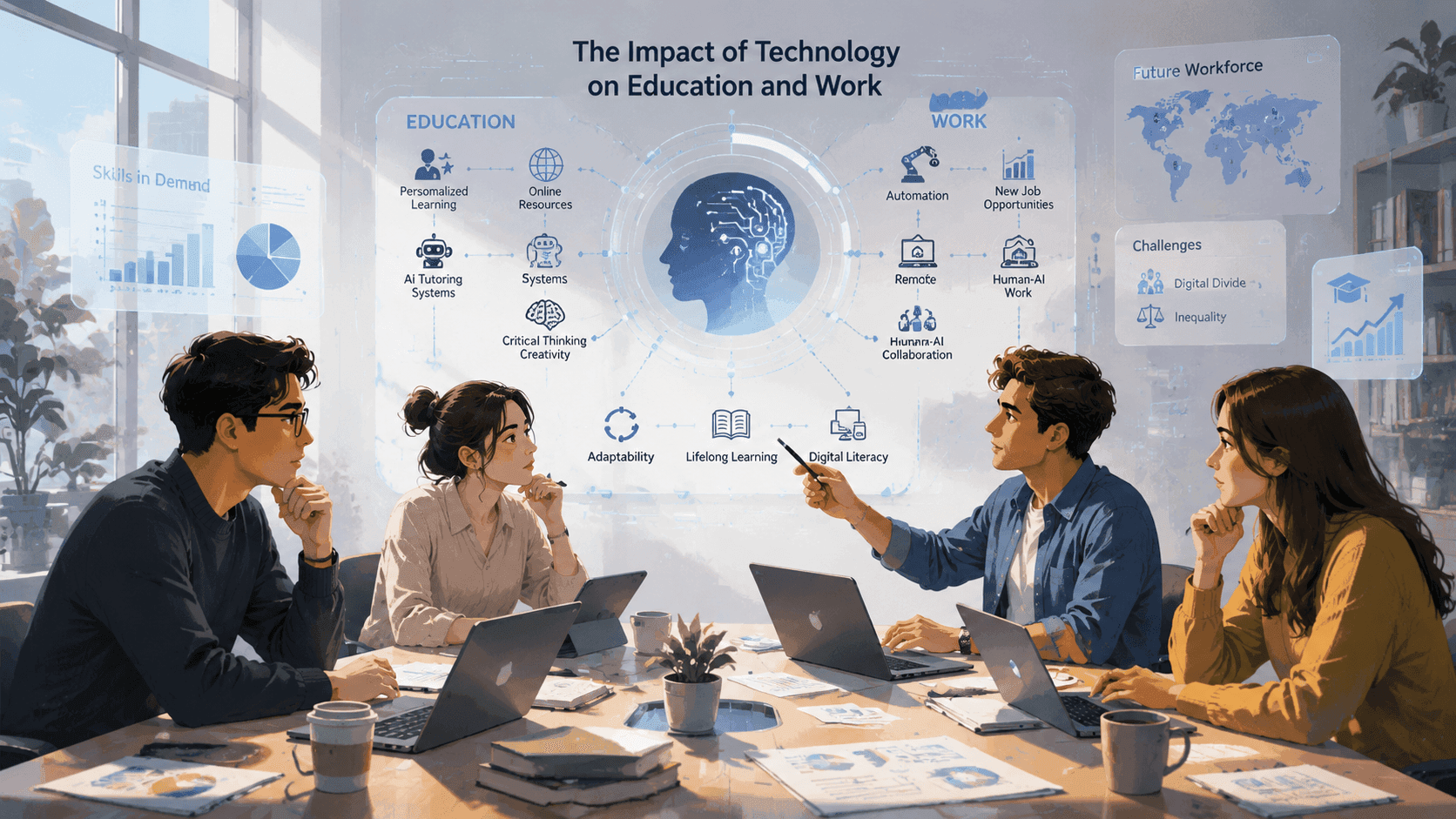
以下是一段四人讨论对话,话题是“技术对教育和工作的影响”,综合运用了之前的核心表达技巧:话题展开与加层、插话与话题转换、澄清与确认、以及总结与收尾。
A: I think AI is going to fundamentally change both education and work. What's more, I think this change is already happening faster than most people realize.
我认为人工智能将从根本上改变教育和工作。更重要的是,我认为这种变化已经在以比大多数人意识到的更快的速度发生。
B: Sorry to interrupt, but could you clarify what you mean by “fundamentally change”? Are you saying AI will replace jobs, or transform them?
不好意思打断一下,但你能澄清一下你说的“从根本上改变”是什么意思吗?你是说人工智能会取代工作,还是会改变工作形式?
A: Good question. I mean both — some jobs will disappear, but many more will evolve. What this means in practice is that skills like critical thinking and adaptability will become far more valuable than routine technical skills.
好问题。我两者都是指——一些工作会消失,但更多的工作会演变。这在实践中意味着批判性思维和适应能力等技能将比常规技术技能更有价值。
C: If I can just jump in — that's a great point, and actually, it connects directly to education. If the most valuable skills are now adaptability and creativity, this raises the question of whether our current curriculum is actually preparing students for this future.
如果我能插一句——这个观点很好,事实上,它与教育直接相关。如果现在最有价值的技能是适应能力和创造力,这引出了一个问题:我们目前的课程体系是否真的在为学生准备这个未来。
D: On a different note, I think we also need to consider who benefits from these changes. The digital divide means that access to AI tools and quality online education is not equal — and this could widen existing inequalities.
换一个角度,我认为我们还需要考虑谁从这些变化中受益。数字鸿沟意味着获得人工智能工具和优质在线教育的机会并不平等——这可能会加剧现有的不平等。
B: Going back to what C said earlier — if I understand correctly, you're suggesting that education systems need to prioritize teaching how to learn, rather than what to learn?
回到C之前说的——如果我理解正确,你是在建议教育系统需要优先教“如何学习”,而不是“学什么”?
C: Exactly — that's a really accurate summary of my point.
正是——这是对我观点非常准确的总结。
A: To summarize what we've discussed, we've covered AI's impact on jobs and education, the question of curriculum design, and the concern about the digital divide widening inequalities. The main points seem to be that change is inevitable, but how we manage it — especially in terms of access and education — is where the real challenge lies. It seems we're broadly on the same page there, even if we have different views on the pace and scale. What do you all think — did I capture the main threads?
总结我们讨论的内容,我们涵盖了人工智能对工作和教育的影响、课程设计问题,以及对数字鸿沟加剧不平等的担忧。主要观点似乎是变化是不可避免的,但我们如何管理它——尤其是在获取机会和教育方面——是真正的挑战所在。看来我们在这一点上大体上看法一致,即使我们对速度和规模有不同的看法。大家觉得——我抓住了主要脉络吗?
这段对话综合运用了:澄清请求(Could you clarify what you mean by...?)、顺势插话(If I can just jump in)、礼貌插话(Sorry to interrupt, but)、话题转换(On a different note)、回溯转换(Going back to what C said earlier)、确认理解(If I understand correctly)、内容汇集总结(To summarize what we've discussed)、共识总结(It seems we're broadly on the same page)、话轮转让(What do you all think?)。
练习题
第一题(选择题)
知识点:科技话题的核心词汇
在讨论社交媒体和信息茧房时,哪个词最准确地描述了“算法只给你看你已经认同的内容,导致观点越来越封闭”这一现象?
A. digital divide
B. automation
C. misinformation
D. filter bubble / echo chamber
第二题(选择题)
知识点:环境话题的讨论框架
在讨论气候变化和个人责任时,以下哪个表达最准确地体现了“系统性变化比个人选择更重要”这一立场?
A. I think we should all try to recycle more and reduce our carbon footprint.
B. Climate change is a very serious problem and we all need to work together.
C. Individual choices matter, but without strong government policy and corporate accountability, personal actions simply aren't enough to drive the systemic change we need.
D. I believe renewable energy is the future of our planet.
第三题(选择题)
知识点:综合对话中的技巧识别
在本章最后的综合示范对话中,B 说“Going back to what C said earlier — if I understand correctly, you're suggesting that...?”这句话同时运用了哪两种讨论技巧?
A. 礼貌插话 + 话题转换
B. 回溯转换 + 确认理解
C. 顺势插话 + 话轮转让
D. 内容汇集总结 + 悬而未决总结
第四题(情景问答)
知识点:话题框架的建立
假设有人突然问你“What do you think about the impact of social media on mental health?”请用“话题框架”的思路,说明你会从哪三个角度展开这个话题(不需要完整对话,只需说明框架和对应的关键词/观点)。
第五题(情景问答)
知识点:综合讨论技能的运用
请选择本章五个话题中你最感兴趣的一个,写出一段约 5-6 句的英文发言,要求:包含至少一个“加层”表达(递进或深化)、一个“反面论证”,以及一个“邀请他人发言”的话轮转让句。在括号中标注使用的技巧。