描述人物外貌与性格
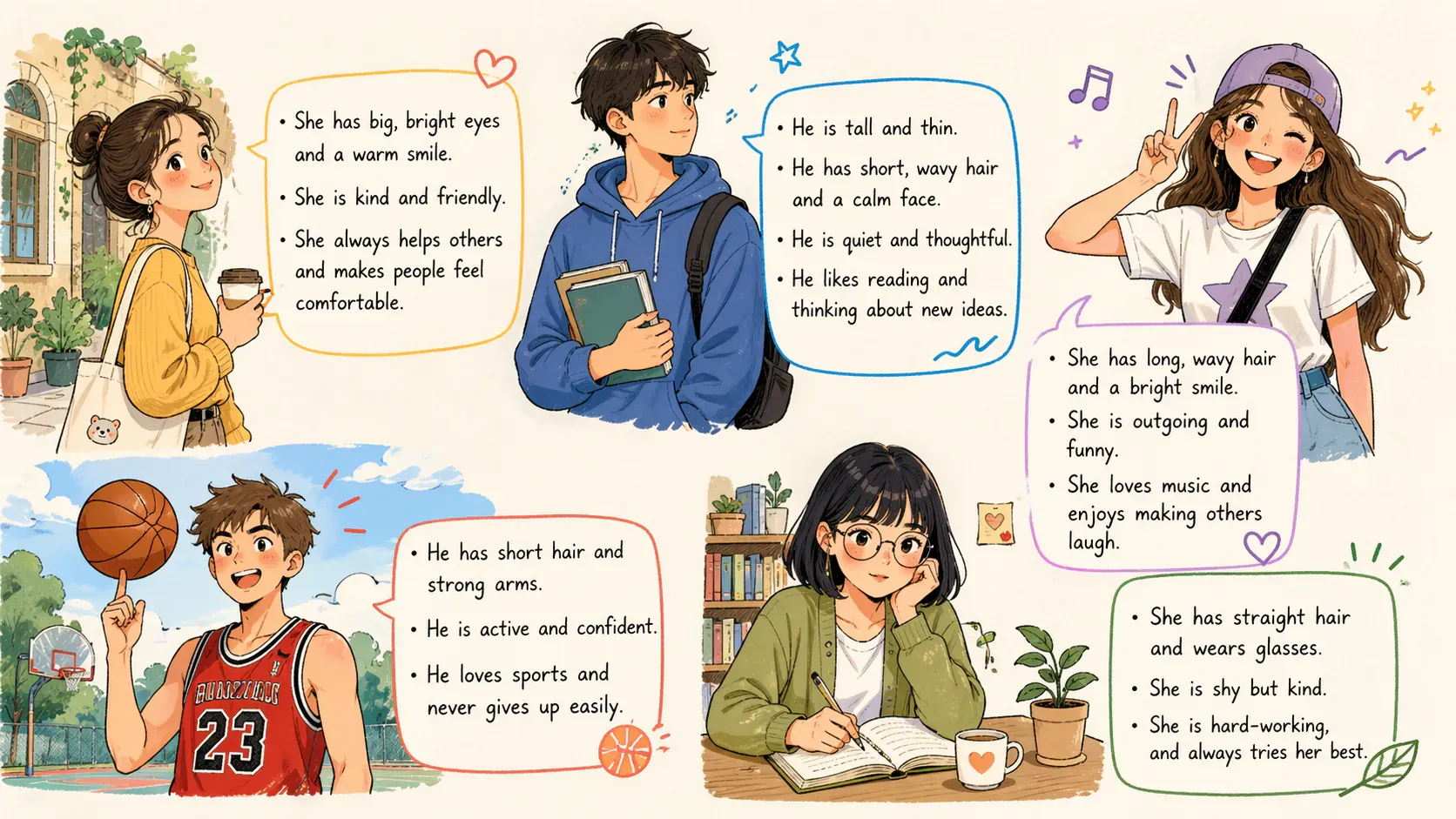
描述一个人,是英语口语中非常常见且实用的交流需求。无论是在向朋友介绍一个你认识的人、向陌生人描述你正在寻找的某人,还是在谈话中表达对某个公众人物的印象,这种能力都会用到。准确地描写一个人的外貌与性格,不仅能让听者迅速形成具体、鲜明的印象,还能大幅提升你沟通的效果和精准度。如果你只能简单地说“他很好”或“她很漂亮”,沟通的信息会非常有限,对方无法了解更多有效的细节,也很难真正“见到”你描述的这个人。
相反,能够用有层次、有细节的语言来描述外貌特征(比如身高、发型、穿着、气质)以及性格特点(比如开朗、细心、幽默、耐心、自信、外向或内向),不仅让你的表达更加生动立体,也能帮助听者在脑海中形成更加清晰、具体的形象。例如:“他大概一米八左右,身材高大,有一头卷曲的金发,总是面带微笑,性格很幽默又乐于助人。” 这样的表达远比简单的“他很好”更具画面感和感染力。
此外,能够丰富而准确地进行人物描述,在日常生活、面试、写作、社交等多种场合都非常有用。比如在问路时描述目标人物、应聘时描述自己特点、社交活动中介绍他人,或者在英语作文与口语考试中都经常会用到这类表达。
外貌描述的顺序
在英语中描述一个人的外貌,通常会遵循从整体到细节的顺序,这样有助于听者迅速在脑海中生成具体、清晰的形象。这一顺序不仅适用于口语沟通,也是写作或考试中描写人物的常用套路。以下是推荐遵循的四个步骤,并配有常见英文表达:
第一步:整体印象(身高、体型、气质)
优先描述对方给人的第一感觉,包括身高、体型和气质。例如:
- “He's quite tall.”(他很高。)
- “She's petite.”(她身材娇小。)
- “He's average height and looks energetic.”(他中等身高,看起来很有活力。)
第二步:发型(长度、颜色、风格)
紧接着进入发型的描述,可以涉及长度、颜色、质地和发型细节,如:
- “She has long, wavy dark hair.”(她有一头深色卷长发。)
- “He has short, cropped hair.”(他留着剪得很短的头发。)
- “Her hair is shoulder-length and straight.”(她的头发及肩,挺直顺。)
第三步:面部特征(眼睛、肤色、表情、胡须等)
进一步刻画面部细节,有助于还原人物生动的形象,比如:
- “She has bright blue eyes.”(她有明亮的蓝眼睛。)
- “He has a warm smile.”(他总是带着温暖的微笑。)
- “He has a neatly trimmed beard and freckles.”(他有修剪整齐的胡须和雀斑。)
第四步:着装风格与细节(可选,但能让描述更完整)
最后可以补充对方的着装、配饰或整体风格,让描写更丰满:
- “She's always well-dressed and loves wearing bright colors.”(她总是穿着得体,喜欢鲜艳的颜色。)
- “He tends to dress casually, often in jeans and sneakers.”(他穿衣风格很随意,经常穿牛仔裤和运动鞋。)
小贴士:
- 描述顺序不一定死板,实际对话时可以根据你想突出的信息调整顺序。
- 多用细节名词和具体形容词(如curly, tanned, piercing blue eyes, athletic build),避免泛泛而谈。
- 情感色彩可以通过补充气质(如friendly-looking, serious, approachable)来表达。
按照上述顺序对人物进行描写,对方更容易抓住关键信息,比随意堆砌形容词更立体、条理清晰。
身高与体型的描述
英语中有丰富的词汇来表达一个人的身高和体型,不同场合需要注意表达的礼貌性和准确性。以下是常用表达:
注意:
- 描述体型时,最好避免直接使用“fat”(胖),因为在英语语境中这常常会被认为不礼貌甚至冒犯。即使需要客观表达超重,也应采用更委婉的说法,比如“He’s a bit overweight.”、“She’s on the larger side.” 或 “He has a heavyset build.”
- 选择描述词汇时,可以根据语境和双方关系灵活调整。比如朋友之间适当幽默可以用chubby或big guy,但在正式、客观或敏感场合更推荐用neutral或温和表达。
- 补充用于整体气质的词汇也能丰富描述: athletic(运动型的)、graceful(有气质的)、elegant(优雅的)、clumsy(笨拙的)、fit(身材好)等,都可配合体型表达个体特征。
发型与面部描述
发型描述与表达法
发型描述例句:
- “She has long, straight black hair.”(她有一头长直黑发。)
- “He wears his hair in a messy bun.”(他梳着一个凌乱的丸子头。)
- “Her hair is shoulder-length and layered.”(她的头发及肩,有分层修剪。)
- “He has a receding hairline.”(他有些发际线后移。)
面部特征词汇与表达法
- eye color: blue / green / brown / hazel / grey / dark eyes
- eye shape: almond-shaped / round / narrow
- other details: expressive / piercing / bright / deep-set / sparkling / sleepy / mischievous eyes
- 面部结构:high cheekbones(高颧骨);strong jawline(轮廓分明的下巴);pointed chin(尖下巴);rosy cheeks(红润的脸颊);dimple(酒窝);freckles(雀斑);wrinkles(皱纹);mole(痣);scar(疤痕)
- 肤色:fair-skinned(皮肤白皙);tanned(晒黑);olive skin(偏橄榄色);pale(苍白)
- 其他(嘴唇、鼻子、表情):full lips / thin lips / upturned nose / straight nose / soft smile / shy smile / bright grin / serious expression
面部特征描述例句:
- “She has big, expressive eyes and rosy cheeks.”— 她有一双大而有神的眼睛和红润的脸颊
- “He has high cheekbones and a strong jawline.”— 他的颧骨很高,下巴线条分明
- “She's got a warm, friendly smile and a dimple on one cheek.”— 她有温暖友善的笑容,脸颊上还有一个酒窝
- “He has a neatly trimmed beard and a moustache.”— 他留着修剪整齐的胡子,还留了小胡子
- “She has fair skin and freckles across her nose.”— 她皮肤白皙,鼻子上有雀斑
- “He has piercing blue eyes that really stand out.”— 他的蓝眼睛十分深邃,引人注目
对话示范:描述一个你认识的人
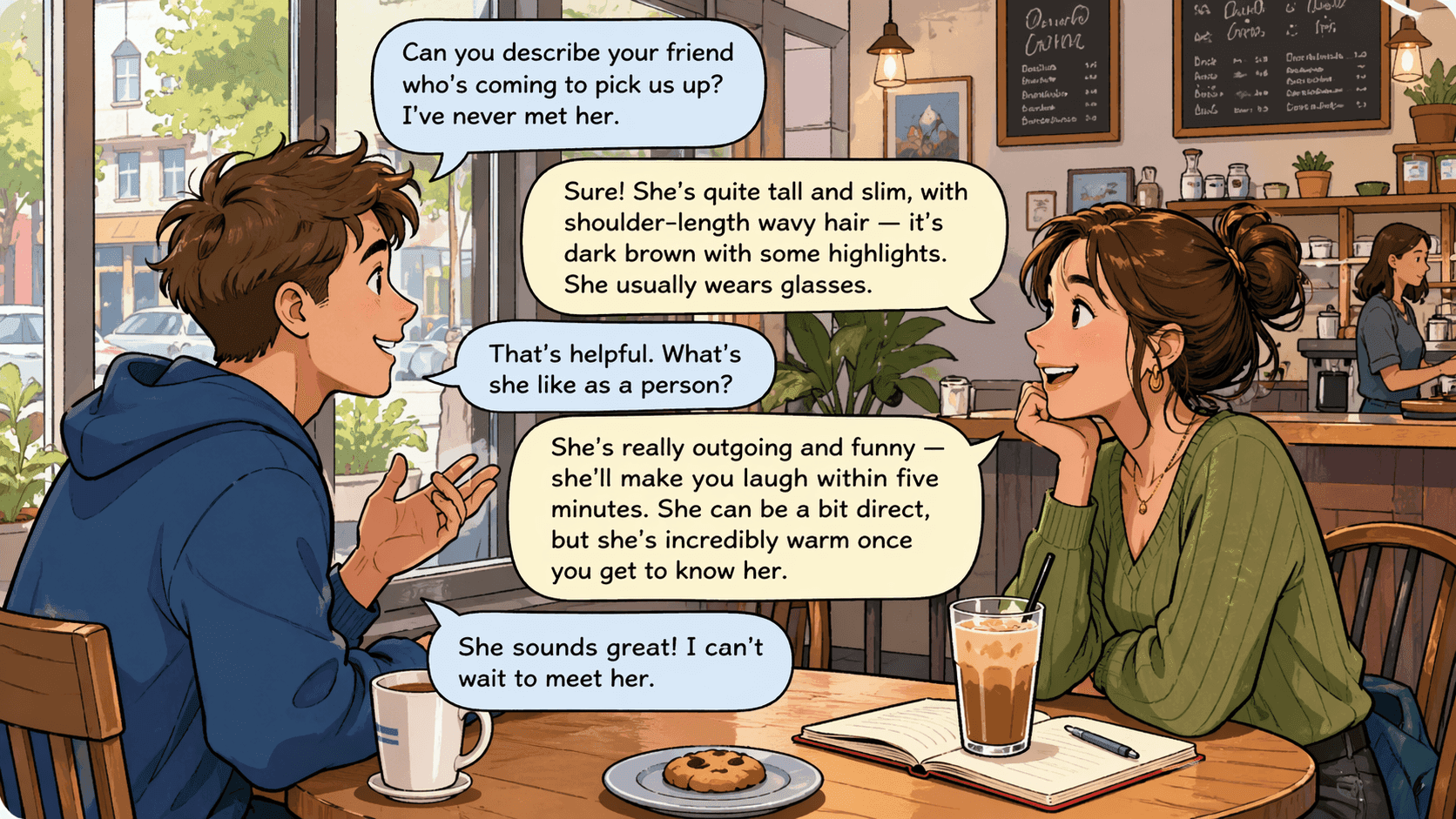
A: Can you describe your friend who's coming to pick us up? I've never met her.
(你能描述一下来接我们的朋友长什么样吗?我从来没见过她。)
B: Sure! She's quite tall and slim, with shoulder-length wavy hair — it's dark brown with some highlights. She usually wears glasses.
(当然!她挺高挑的,肩膀长度的卷发——深棕色带一些挑染。她通常戴眼镜。)
A: That's helpful. What's she like as a person?
(很有帮助。她这个人怎么样?)
B: She's really outgoing and funny — she'll make you laugh within five minutes. She can be a bit direct, but she's incredibly warm once you get to know her.
(她非常外向、有趣——不出五分钟就会让你笑起来。她有时候比较直接,但一旦你了解了她,会发现她极其热情。)
A: She sounds great! I can't wait to meet her.
(听起来很棒!我迫不及待想认识她了。)
表达解析:
“What's she like as a person?”——这是询问一个人性格的最地道方式,比“What is her character?”自然得多。
“She can be a bit direct, but she's incredibly warm once you get to know her.”——这是描述人物时非常真实的表达方式:先提一个可能被误解的特质,再用“but once...”解释背后的本质,立体感很强。
精准又多样地描述一个人
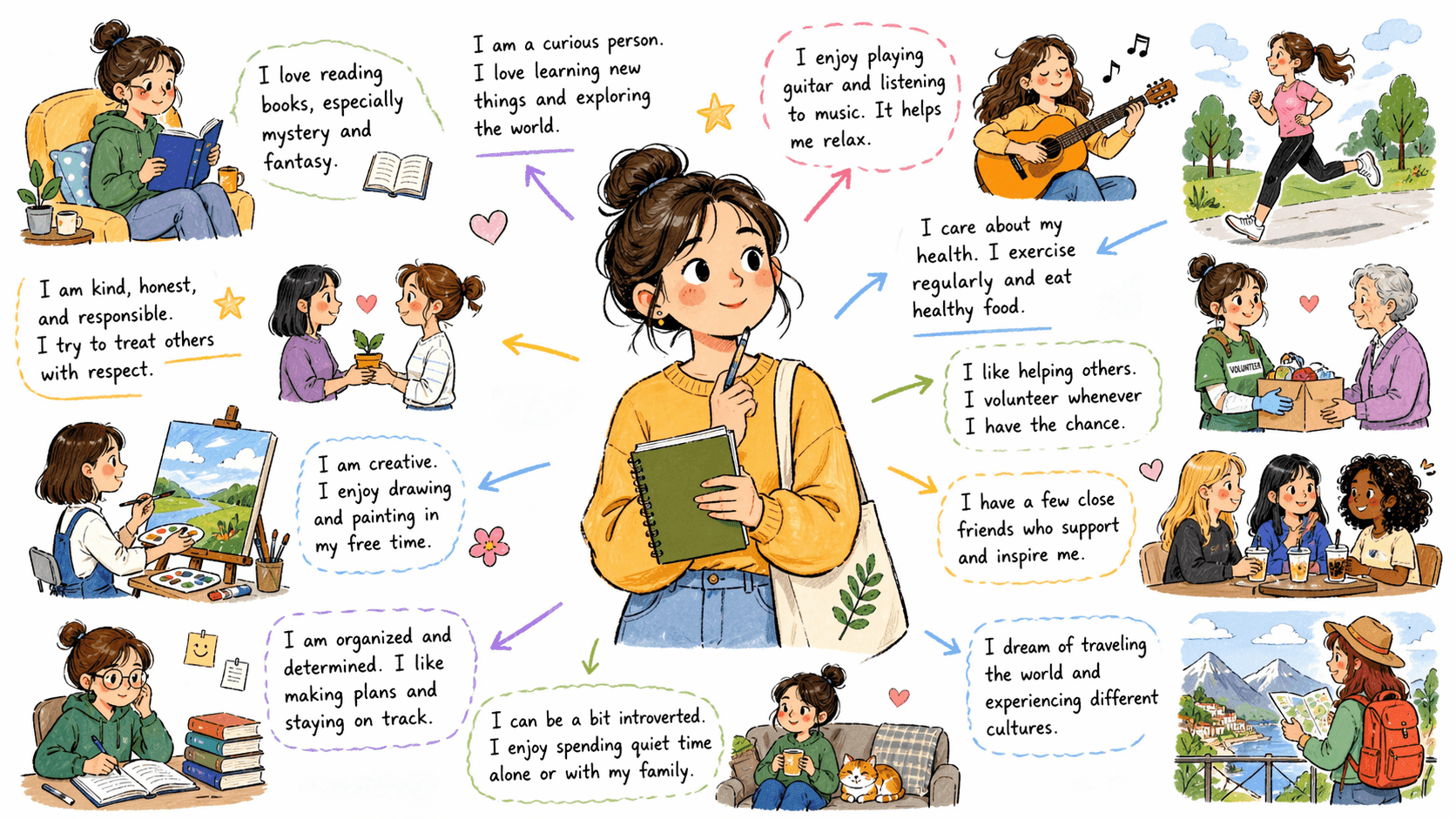
描述性格时,选择恰当、细致的词汇非常关键。恰当的形容词不仅能让人物栩栩如生,还能传达微妙的个性特质。下面提供更丰富和细分类别的性格形容词,并配有用法说明。
正面性格(褒义,易于称赞)
“outgoing” — 外向的(喜欢社交、活跃)
“confident” — 自信的
“patient” — 有耐心的
“reliable / dependable” — 可靠的(“reliable”更书面,“dependable”更口语)
“creative” — 有创造力的
“ambitious” — 有抱负的
“warm / warm-hearted” — 热情的、热心的
“humorous / funny” — 幽默的
“thoughtful” — 体贴周到的
“generous” — 慷慨的
“supportive” — 支持他人的
“flexible” — 灵活的,能适应变化
“adaptable” — 适应力强的
“diligent” — 勤奋的
“sincere” — 真诚的
“optimistic” — 乐观的
“open-minded” — 思想开放的
中性性格(正负视角、因语境而异)
“quiet / reserved” — 安静的、内敛的
“serious” — 认真的
“direct / straightforward” — 直接的
“independent” — 独立的
“competitive” — 有竞争心的
“cautious” — 谨慎的
“practical” — 实际的
“observant” — 善于观察的
“curious” — 好奇的
负面性格(需要小心用,有时建议委婉表达)
“stubborn” — 固执的
“arrogant” — 傲慢的
“impatient” — 没耐心的
“moody” — 情绪多变的
“selfish” — 自私的
“bossy” — 喜欢指挥别人的
“critical” — 爱挑剔的
“insecure” — 缺乏安全感的
“pessimistic” — 悲观的
“overbearing” — 专横的
如何委婉表达负面性格
直接说出负面形容词,会显得唐突甚至冒犯。英语中常用“can be a bit... sometimes”结构表达委婉,如:
- 与其直说 “He’s arrogant”(他很傲慢),不如:“He can come across as a bit overconfident sometimes.”(他有时候给人一种过于自信的感觉。)
- “She’s quite direct, which not everyone appreciates at first.”(她很直接,一开始不是每个人都能适应。)
用具体行为支撑性格描述
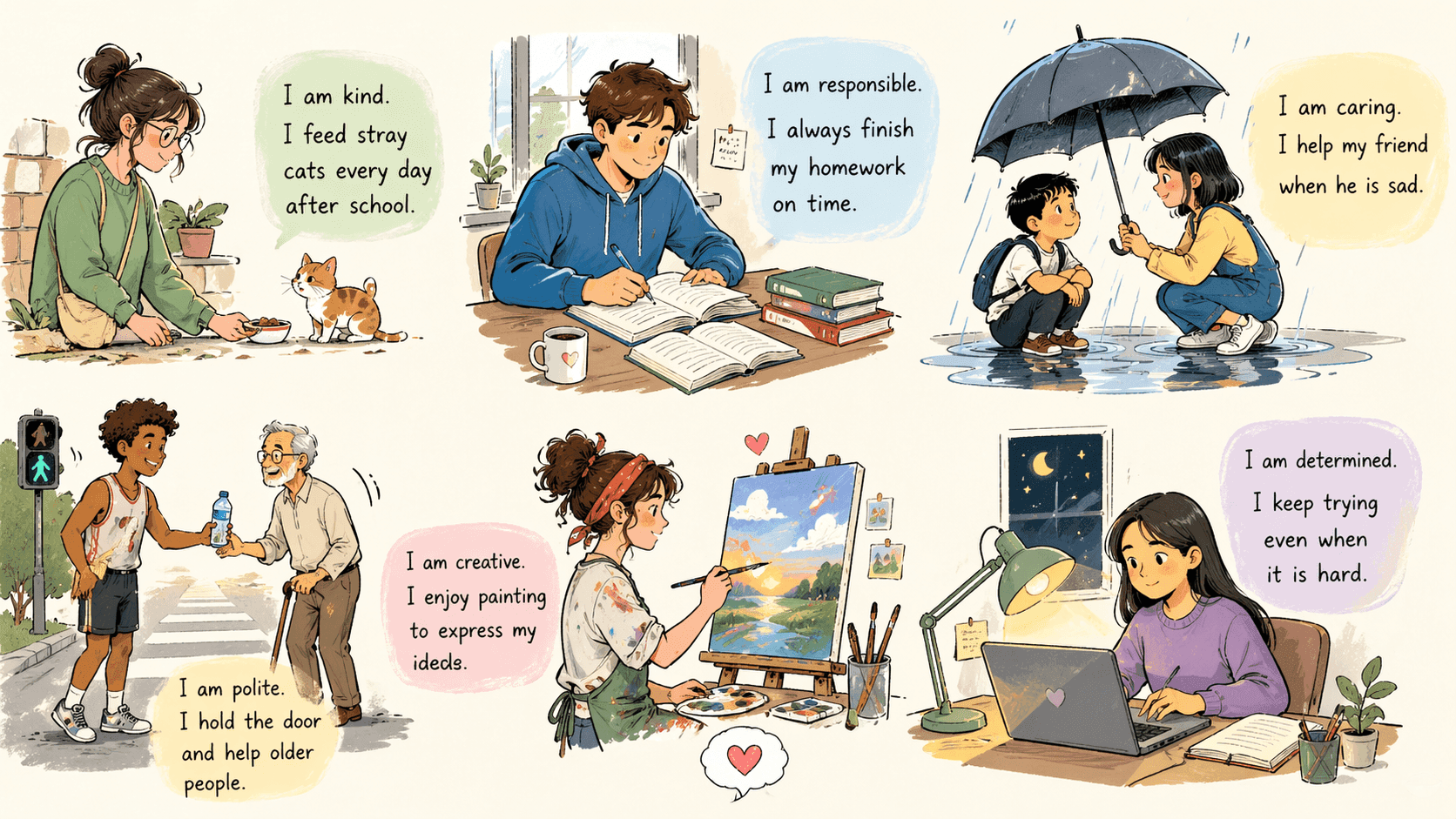
只说“She's organized”效果有限,加上具体行为实例,描述会立刻生动、令人信服。
“She's extremely organized. Every meeting has a clear agenda, and she always follows up with notes afterwards.”
(她极其有条理。每次会议都有清晰的议程,之后她总会发跟进笔记。)
“He's very patient. When I was struggling with the project, he spent two hours explaining it to me without any sign of frustration.”
(他非常有耐心。当我在为项目发愁时,他花了两个小时给我解释,完全没有表现出任何不耐烦的迹象。)
更多例子:
- “He's incredibly reliable. If he promises something, you know it'll get done.”
(他非常靠谱。他答应的事情一定会完成。)
- “She's so creative. Her ideas always surprise the team in a good way.”
(她非常有创造力。她的想法总能给团队带来惊喜。)
总之,“性格词 + 具体行为例子”的结构,是英语描述人物时最有说服力、最自然的方式。
比较式描述
通过比较,能让对方迅速抓住人物的特质。比较通常包括外貌、气质、性格等方面。常用表达有:
“He reminds me a little of David — they have a similar way of speaking.”
他让我有点想到David,他们说话的方式很像。
“She looks a bit like Lisa but with shorter hair and glasses.”
她长得有点像Lisa,不过头发更短,还戴眼镜。
“He's similar to my cousin in terms of personality — both are very driven and ambitious.”
(他和我表哥的性格很像——都很有冲劲和雄心。)
也可以这样举例说明:
- “She has the same sense of humor as her brother — quick and clever.”
(她和她哥哥一样幽默,反应快且机智。)
- “His work ethic is a lot like our former manager's — very responsible and detail-oriented.”
(他的工作态度很像我们前经理——非常负责任、注重细节。)
比较式描述能帮助听众用共同认识或熟悉的参照物,加深对人物的理解和印象。
练习题
练习一(选择题)
知识点:描述外貌时形容词的顺序
你想描述“她有长而直的黑发”,下面哪个表达最符合英语形容词的自然顺序?
A. She has black straight long hair.
B. She has long straight black hair.
C. She has straight black long hair.
D. She has hair long black straight.
练习二(选择题)
知识点:委婉描述体型
你想描述一个朋友“身材偏胖”,下面哪个表达最得体?
A. He's fat.
B. He's a big guy.
C. He's on the heavier side / a bit overweight.
D. He looks like he eats too much.
练习三(选择题)
知识点:询问人物性格的自然方式
你想了解一个你还没见过的人的性格,下面哪个问法最自然地道?
A. What is his character?
B. What are his personal traits?
C. What's he like?
D. Describe his personality to me.
练习四(情景问答)
知识点:用完整结构描述一个人的外貌和性格
情境: 你的朋友从未见过你的老师,但他们下周会在一个活动上遇到。请用英语描述你的老师(5-6句话),包含:外貌(整体 + 至少两个具体特征)+ 性格(至少两个特质 + 一个具体行为例子)。
练习五(情景问答)
知识点:用比较和行为例子让描述更生动
情境: 请描述你生活中认识的一个人(朋友、同学或家人)。描述要求:
- 给出2-3个外貌细节
- 用一个比较(“He/She reminds me of...”或“He/She looks a bit like...”)
- 给出2个性格特质并各加一个具体的行为例子