解释与说明
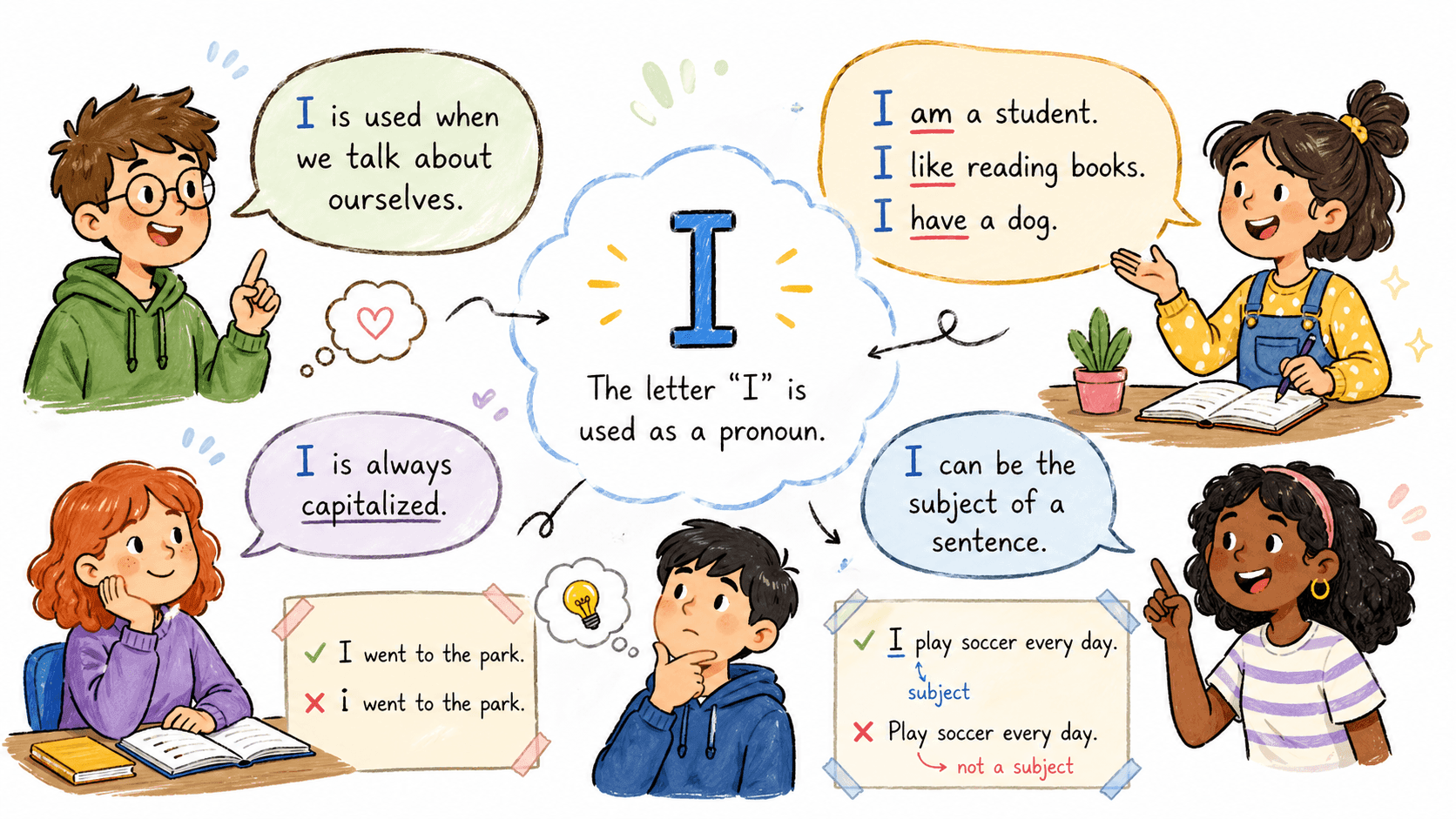
在日常英语交流中,“解释”和“说明”是必不可少的沟通能力。这不仅仅体现在为他人解答疑惑、解释迟到的原因,还包括详细说明某个工具或设备的使用方法,分步骤描述一个复杂任务的完成流程,乃至帮助同事或朋友更好地理解某个抽象概念。例如,在工作中,你可能需要向团队解释项目延期的原因,向新员工说明公司内部流程,或用通俗易懂的方式向客户介绍技术细节。在学习中,清楚地表达自己的思考过程,会促进讨论与合作。
有效的解释能够帮助对方准确理解你的想法和意图,避免因信息不对称产生误会,提高协作效率和人际关系的融洽。与此同时,如果发现自己第一次表述没有被理解,人们还需要尝试换一种表达方式,或借助具体例子、实际比喻、类比说明等方式,帮助对方更好地领会所讲内容。良好的解释能力还体现在能根据听众的背景和知识水平调整表达方式,让信息传递更加精准。
无论是在工作、学习还是日常社交场合,掌握清晰、有条理、有逻辑的解释和说明能力,不仅能让你的表达更具说服力、条理性,也能让人更容易信任你、愿意和你合作。这是现代社会中不可或缺的一项软技能,值得我们不断练习和提升。
表达原因与理由
解释往往从“为什么”开始。英语表达原因的方法非常丰富,不同用法能体现不同的正式程度、强调点以及情境风格。学会因时、因人恰当地选择合适的原因结构,是英语交流核心技能之一。
常用连接词和短语
- because — 最直接的原因连词,既可用于口语,也适用于书面语,后面跟完整的句子。例如:
I stayed at home because it was raining.
(我呆在家里,因为下雨了。)
- because of + 名词 — 强调某事或某物为原因,后面只能跟名词或名词短语。例如:
The game was canceled because of the weather.
(比赛因天气原因取消。)
- since / as — 多用于说明双方都已知的原因,适合放句首,语气较为柔和。例如:
Since you're here, let's get started.
(既然你来了,那我们就开始吧。)
- due to + 名词 — 带有一定的正式感,多见于书面或公告,如:
The flight was delayed due to technical problems.
(航班因技术问题延误。)
- owing to + 名词 — 与due to类似,语气偏正式。例如:
The concert was postponed owing to rain.
(演唱会因下雨推迟。)
- That's why... — 用于说明因果关系,前面先给出原因,后面以“That's why...”引出结果,口语常用。例如:
I didn't eat breakfast. That's why I'm so hungry now.
(我没吃早饭,这就是我现在很饿的原因。)
- The reason (why) ... is that ... — 强调原因,笔头和演讲中常用。例如:
The reason I called you is that I need your advice.
(我给你打电话的原因是我需要你的建议。)
其他表达方式补充:
- for this/that reason — 用于较正式的说明或总结。例如:
For this reason, we decided to postpone the meeting.
(因此,我们决定推迟会议。)
- thanks to + 名词 — 表达积极含义的“多亏了”,带有感激色彩。例如:
Thanks to your help, we finished on time.
(多亏你的帮助,我们按时完成了。)
句型对比与强化说明:
-
“I was late because there was an accident on the road.”
(我迟到了,因为路上有事故。——直接原因,结构最常用。) -
“I was late because of an accident on the road.”
(我迟到了,因为路上的事故。——用介词短语,语气稍偏向简明。) -
“As there was an accident on the road, I was late.”
(由于路上有事故,我迟到了。——结构更书面化,强调“原因在前,结果在后”。) -
“There was an accident on the road. That’s why I was late.”
(路上有事故,所以我迟到了。——先交代背景,再用That's why总结因果。) -
“My absence was due to illness.”
(我缺席是因为生病。——正式、书面。) -
“Owing to the heavy snow, the school was closed.”
(因为大雪,学校停课。——更偏正式。) -
“Thanks to your timely reminder, I caught my train.”
(多亏你的及时提醒,我赶上了火车。——强调积极结果。)
日常用法小贴士:
- “because” 后只能接完整的句子;“because of/due to/owing to/thanks to”后面只能跟名词或名词短语。
- 口语中通常用because、because of、That's why。书面或正式场合更常用due to、owing to、for this reason等表达。
- 当想语气自然随和时可用because/That's why;表达总结、强调时适合用for this reason, the reason is that等结构。
描述流程:按步骤说明
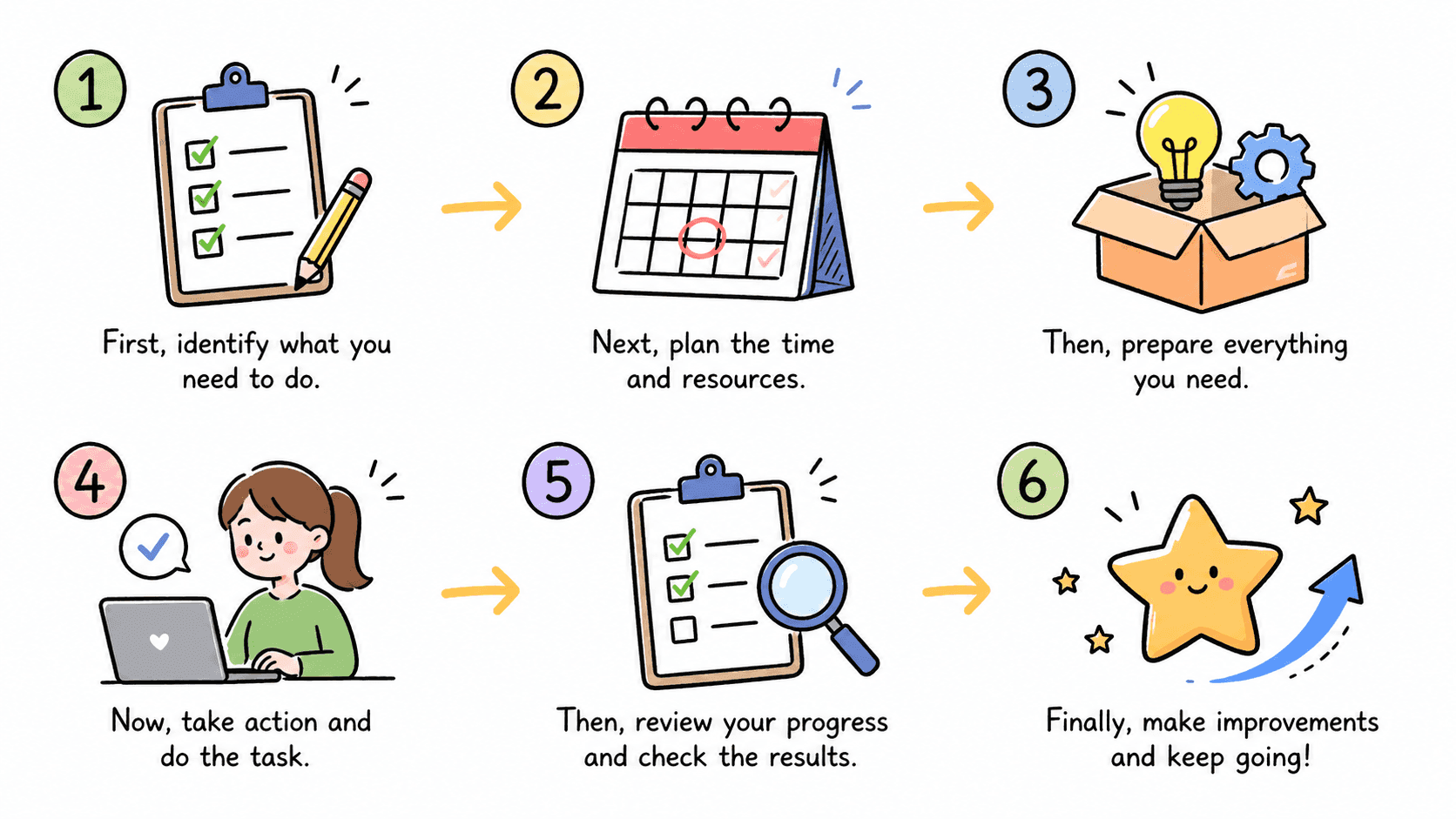
当你需要说明某个操作、流程或者指导别人完成一项任务时,英语里有一整套清晰表达顺序和步骤的常用短语。这让听众更容易跟上你的讲解,有条理地理解每一步。
第一步
你可以从以下短语开头:
- “First of all...”
- “To begin with...”
- “The first step is to...”
- “Initially...”
这些表达有助于明确第一项需要做的事情。
例:First of all, open the app and sign in.
(首先,打开应用并登录。)
中间步骤
描述中间步骤时,可以用:
- “Then...”
- “After that...”
- “Next...”
- “Once you've done that...”
- “At this point...”
- “In the meantime...” (在此期间,用于并行或等待某事发生)
例:Then, select your destination from the list.
(然后,从列表中选择你的目的地。)
Next, confirm your details.
(接下来,确认你的个人信息。)
After that, you'll receive a confirmation email.
(之后,你会收到一封确认邮件。)
最后步骤
说明流程的最后阶段时,常用:
- “Finally...”
- “The last step is to...”
- “Once everything is in place...”
- “At the end...”
这些短语可用于标志流程的结束或收尾部分。
例:Finally, save your changes and log out.
(最后,保存更改并注销。)
验证与注意事项
| 英文表达 | 说明 | 英文例句 | 中文翻译 | 分类 |
|---|---|---|---|---|
| Make sure that... | 提醒检查关键事项。 | Make sure that you enter the correct password. | (确保你输入了正确的密码。) | 关键检查 |
| Check that... | 核查细节是否正确。 | Check that the address is correct before submitting. | (提交前检查地址是否正确。) | 细节核查 |
| If [条件], then [结果]. | 表达条件与结果逻辑。 | If you forget your password, then click 'Forgot Password'. | (如果忘记了密码,请点“Forgot Password”。) | 逻辑流程 |
| Don't forget to... | 补充提醒,防止漏步。 | Don't forget to save before closing the window. | (关闭窗口前别忘了保存。) | 提醒 |
流程描述技巧:
- 每步前加时间/顺序短语,使说明条理清晰。
- 复杂流程可以嵌入简单说明,如:“At this point, you may need to wait a few minutes.”
- 必要时用小贴士强调容易出错的地方,如:“Make sure you save your changes before closing the window.”
通过合理搭配这些表达,你可以让听众或读者迅速理解过程,跟随你的指引顺利完成任务,不遗漏重要环节。
对话示范:解释一个流程
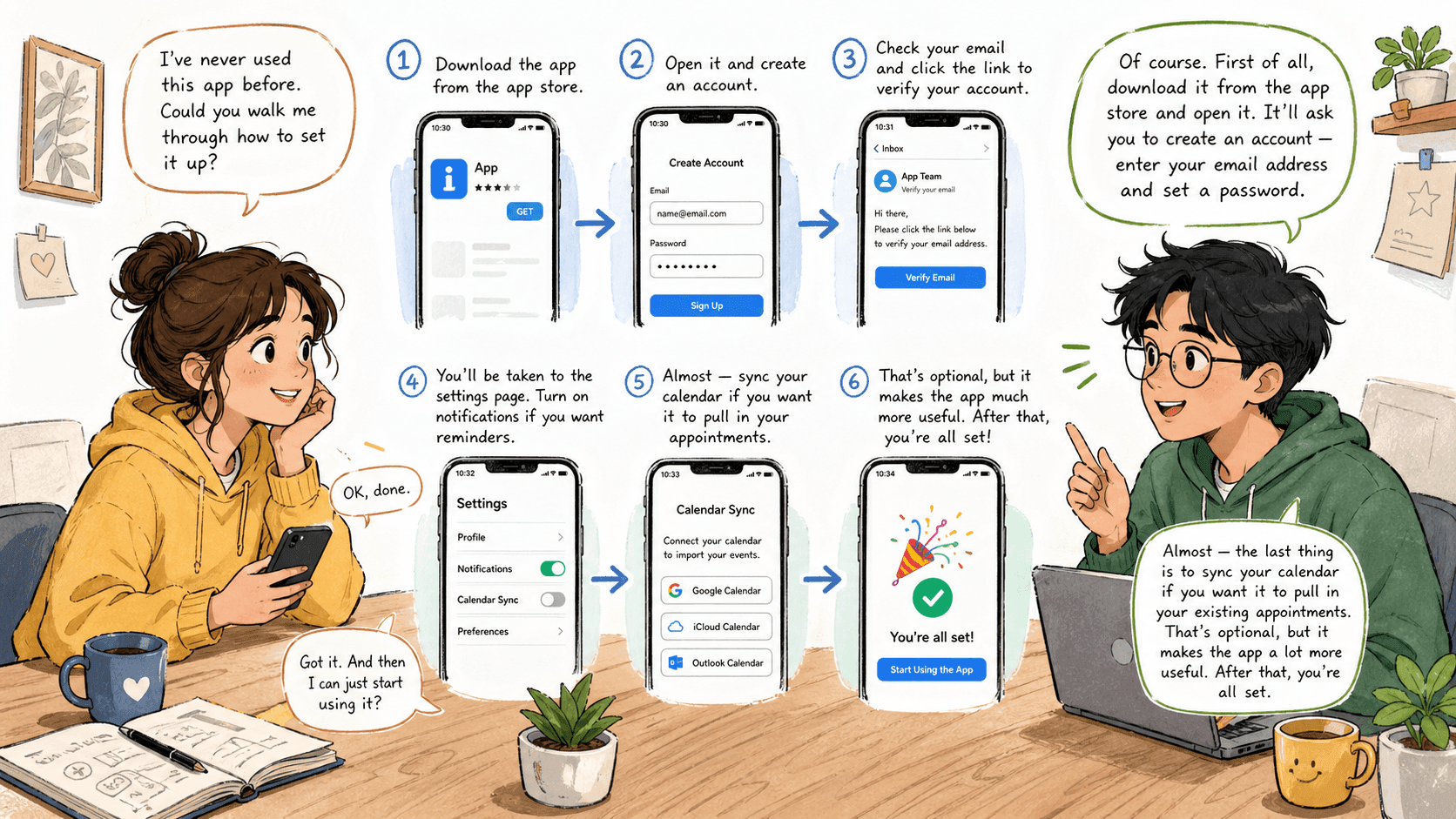
A: I've never used this app before. Could you walk me through how to set it up?
(我之前从来没用过这个应用。你能带我一步一步设置一下吗?)
B: Of course. First of all, download it from the app store and open it. It'll ask you to create an account — enter your email address and set a password.
(当然。首先,从应用商店下载并打开它。它会要求你创建一个账户——输入你的邮箱地址并设置密码。)
A: OK, done.
(好的,完成了。)
B: Good. Now it'll send a verification email — make sure you check your inbox and click the link. That activates your account. Once that's done, you'll be taken to the settings page. The most important thing at this stage is to turn on notifications if you want reminders — it's off by default.
(好。现在它会发一封验证邮件——确保你检查收件箱并点击链接。这会激活你的账户。完成后,你将被带到设置页面。这个阶段最重要的事是,如果你想要提醒,就打开通知——默认是关闭的。)
表达解析:
“Walk me through...”——这个短语意思是“一步一步带我(完成某个流程)”,非常口语化,常用于请求别人指导,比“explain to me”更体现“手把手”的感觉。
“It's off by default.”——“by default”意思是“默认情况下”,是科技话题中非常常用的表达。“off by default”即“默认是关闭的”。
“You're all set.”——对话最后常用的收尾句,意思是“一切准备好了、都搞定了”,语气轻松友好。
换一种方式解释:当对方没听懂
在解释一个流程或概念后,对方如果仍然表现出疑惑,比如皱眉、沉默、或者直接说“我没太明白”,你就需要换一种说法,用不同角度再说明。多用简单词汇、举例、比喻或拆解步骤,能大大提高对方的理解度。
如何确认对方是否理解?可以这样问:
“Does that make sense?”— 这样说清楚了吗?
“Am I making myself clear?”— 我说清楚了吗?
“Let me know if that's not clear.”— 如果不清楚告诉我。
“Should I go over that again in a different way?” — 要不要我换种方式再讲一遍?
“Feel free to stop me if you have questions.” — 有问题随时打断我哦。
“All clear so far?” — 目前是否都清楚?
这些表达既礼貌又能及时发现沟通障碍。
换一种方式解释,可以用:
“Let me put it a different way.”— 让我换个方式说。
“To put it simply...”— 简单来说……
“What I mean is...”— 我的意思是……
“In other words...”— 换句话说……
“Basically,...”— 基本上……
“A simple way to think about it is...” — 一种简单的理解方式是……
“Think of it like...”— 可以把它想象成……
“It's a bit like...”— 有点像……(用比喻帮助理解)
“For example,...” — 举个例子……
“Another way to look at this is...” — 还有一种看法是……
用比喻和类比来解释复杂概念,是英语教学和真实日常交流中极为有效的方法。例如,“Think of it like a filing cabinet — the hard drive stores files, and the RAM is your desk where you work on them.”(可以把它想象成一个文件柜——硬盘存储文件,而内存就是你工作时的桌面。)
又如,“You can think of updating software like giving your phone a health check.”(可以把软件更新想成给手机做健康检查。)这类解释比抽象的技术定义直观得多,也更容易让人记住。
有时还可以结合对方的兴趣举例,比如对运动感兴趣的人可以说:“Learning vocabulary is like building muscle — you need regular practice.” (背单词就像增肌,要经常练习。)
解释结果与后果
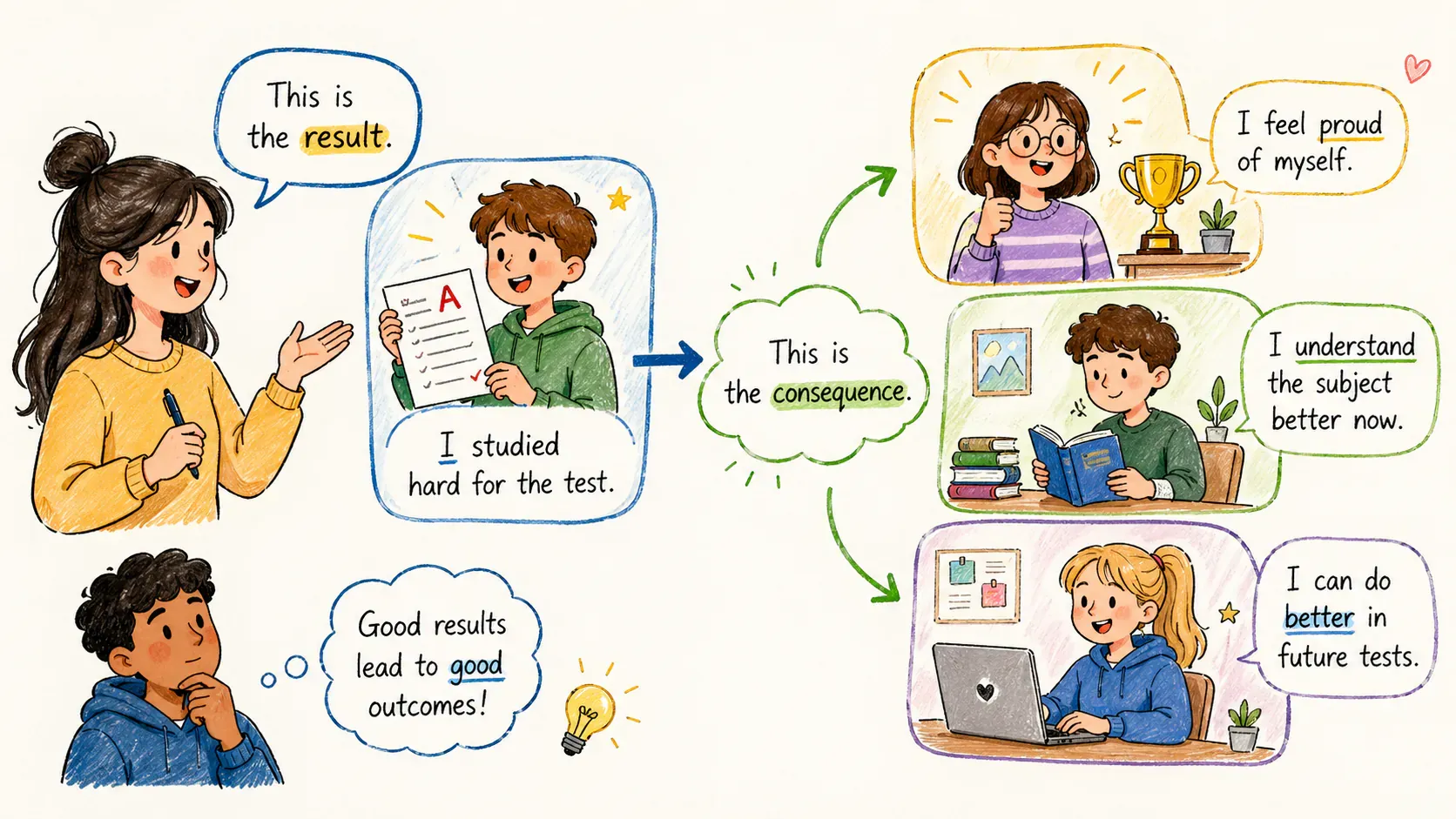
在英语中,表达“因为A,所以B”时,除了直接用“because”,还可以灵活运用不同的连接词或结构,使表达更自然有层次。
常见的结果连接词
“Therefore...”, “As a result...”, “Consequently...” — 因此……(常用于书面/正式语境)
“This means that...” — 这意味着……(便于引出结论)
“This led to...” / “This resulted in...” — 这导致了……
“Hence,...” — 因此……(书面/正式)
“So...” — 所以……(最口语化、灵活)
“That’s why...” — 这就是为什么……
搭配条件语句表达因果
这些表达可以让你的说明听起来更有逻辑、更细致,也更具说服力。无论是在教学过程中,还是在职场沟通、日常生活中解释流程和因果关系时,灵活使用这些表达都能让你的表达结构清晰、层次分明。
此外,恰当选择这些过渡词和结构,还能帮助你更好地引导听众的理解,使复杂的内容变得通俗易懂。建议在不同场合下,根据实际需要调整表达方式,让你的说明既有条理又生动,更容易获得他人的认同和共鸣。
练习题
练习一(选择题)
知识点:“because”与“because of”的区别
选出语法正确的句子:
A. He couldn't come because of he was sick.
B. He couldn't come because he was sick.
C. He couldn't come because of being sick him.
D. He couldn't come because sickness.
练习二(选择题)
知识点:描述步骤流程的过渡词
你在解释如何注册一个账户,按顺序排列以下步骤最合理的是哪个?
A. Finally, you're done. First, enter your email. Next, set a password. Then, verify your email.
B. First, go to the website and click “Sign up”. Then, enter your email address and choose a password. After that, you'll receive a verification email — click the link inside. Once you've done that, your account is active.
C. You are done. Enter email. Verify. Password.
D. Enter email. Then done. Set password. Click link after verify.
练习三(选择题)
知识点:换一种方式解释
你在解释一个概念,对方说“I'm not sure I follow.”(我不太跟得上。)你应该怎么回应?
A. I already explained it.
B. Let me put it a different way — think of it like...
C. It's very simple, just listen carefully.
D. You should understand it by now.
练习四(情景问答)
知识点:按步骤说明一个日常操作流程
情境: 你的外国朋友想学如何用微信(WeChat)给别人转账。请用英语,按步骤说明整个操作流程(6-8句话),使用“First, Then, After that, Make sure, Finally”等步骤词。
练习五(情景问答)
知识点:解释一个抽象概念,用比喻帮助理解
情境: 你的朋友不理解什么是“时差”(jet lag),问你“What exactly is jet lag? Why does it happen?”请用英语解释(5-6句话),先用简单的方式说明它是什么,再说明为什么会发生,最后用一个比喻帮助对方理解。