应急与帮助请求
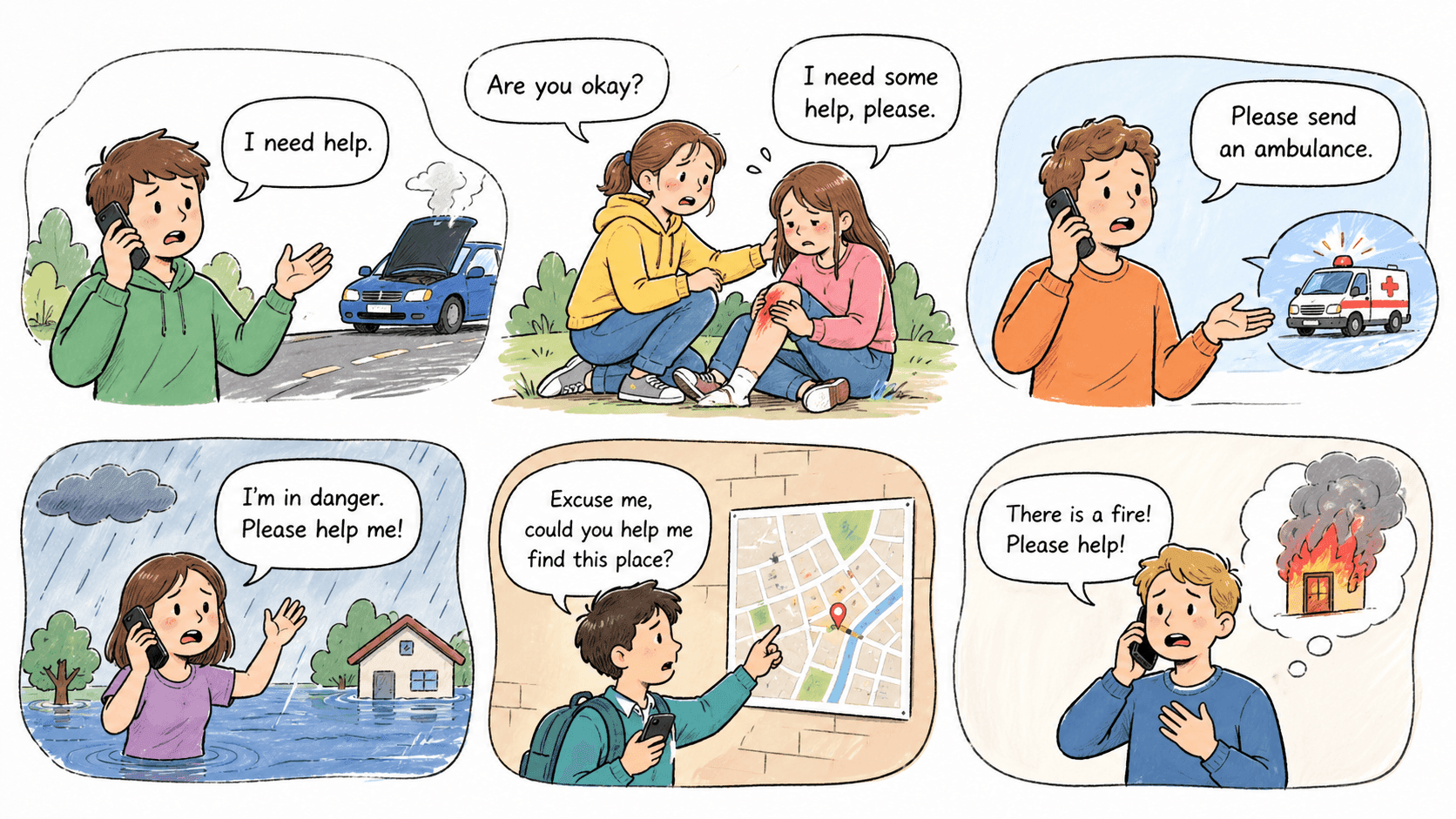
在日常生活或异国旅行中,无论你身处何地,突发意外和紧急情况总是不可预料。你可能会突然迷路、感到身体不适、遗失了贵重物品、遇到交通事故,或遭遇需要立刻请求他人帮助的紧急时刻。例如,在地铁站突然头晕目眩、无法站稳,需要向身边的人表达求助意图;朋友在街头晕倒,你需要向陌生人发出紧急呼救;旅途中丢失行李、护照或钱包,必须及时与工作人员有效沟通;甚至在酒店遇到火警、居住地突发停电等突发状况时,也需要迅速清楚地说明自己的处境和需求。
此外,还可能出现如在国外购物时丢失包、在景区遭遇小偷、孩子与自己走散等意外,这些都需要你用英语冷静并准确地阐述问题。 在这些压力大、气氛紧张的场景中,简单直接、条理清晰地表达你的请求,能大大提升获得及时帮助的概率。掌握这类应急沟通英语,不仅可以保护自己,也能在关键时刻帮助身边的人,为他人争取宝贵的救援时间和机会。
日常帮助请求
在不紧急但需要帮助的日常场合,以下句型非常实用,无论你需要寻路、请求协助、借用物品还是向陌生人咨询问题,这些表达都能帮你礼貌并清晰地说明自己的需求:
常见请求场景
“Could you tell me how to get to the nearest subway station?”— 请问最近的地铁站怎么走?
“Do you know where I can find a pharmacy?”— 你知道哪里有药店吗?
“Would you mind watching my bag for a moment?”— 你能帮我看一下包吗?
“Can I borrow your phone for a quick call?”— 我可以用一下你的电话打个电话吗?
“Could you please explain this sign to me?”— 你能帮我解释一下这个标志的意思吗?
紧急情况:第一步先说清楚
在真正的紧急情况中,最重要的是先说你需要什么,再解释细节。直接、简洁、清楚地呼救和描述所在位置非常关键,这样救援才会更及时有效:
快速告知紧急情况
“Help! / Please help me!”— 救命!/ 请帮帮我!
“This is an emergency.”— 这是紧急情况。
“Please call an ambulance.”— 请叫救护车。
“Please call the police.”— 请报警。
“I need a doctor.”— 我需要医生。
“There's been an accident.”— 发生了事故。
“I've been robbed.”— 我被抢劫了。
“I think someone is hurt.”— 有人受伤了。
“Please get help!”— 请去找人帮忙!
报告位置
“We're near West Nanjing Road, by the metro station.”— 我们在南京西路,地铁站附近。
“I'm on Elm Street, near the Central Park entrance.”— 我在榆树街,靠近中央公园入口。
“I'm at the corner of 5th Avenue and Main Street.”— 我在第五大道和主街的拐角处。
“We're outside the City Library.”— 我们在市图书馆外面。
“I'm not sure exactly where I am, but I can see a large red sculpture and a Starbucks.”
(我不太确定具体位置,但我能看到一个很大的红色雕塑和一家星巴克。)
“My location is next to a bus stop with the number 22 sign, across from a pharmacy.”— 我的具体位置是在22路公交站牌旁,对面有一家药店。
补充说明
“Please hurry!”— 请快一点!
“It's urgent!”— 很紧急!
“I can't move him/her.”— 我不能移动他/她。
“My friend isn't breathing.”— 我朋友没有呼吸了。
这些表达可以帮助你在危急时刻快速、准确地获得所需的帮助。
对话示范:报告紧急情况
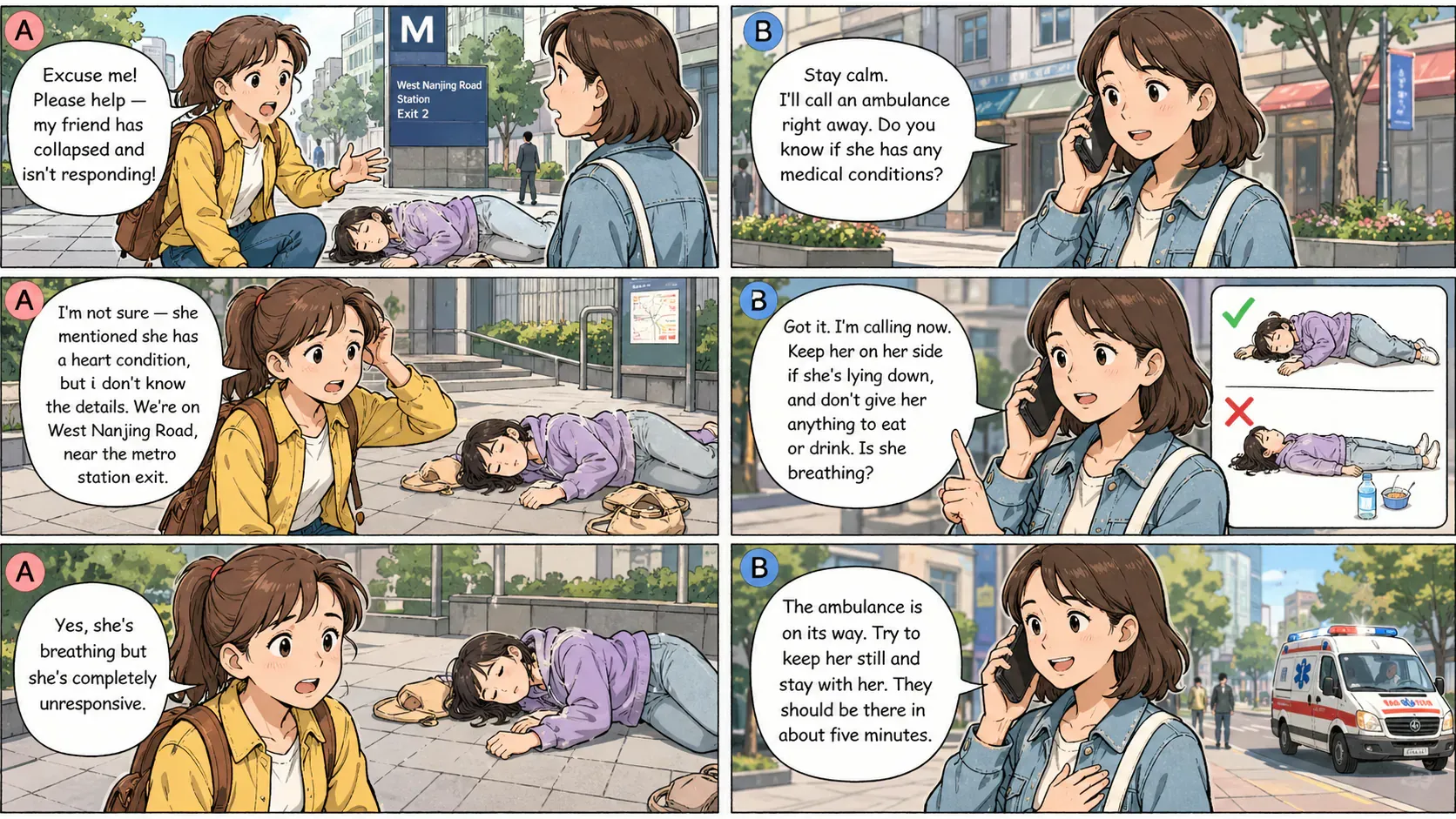
(场景:旅行时,同行朋友突然晕倒)
A: Excuse me! Please help — my friend has collapsed and isn't responding!
(打扰一下!请帮忙——我朋友晕倒了,没有反应!)
B: Stay calm. I'll call an ambulance right away. Do you know if she has any medical conditions?
(保持冷静。我马上叫救护车。你知道她有没有什么病史吗?)
A: I'm not sure — she mentioned she has a heart condition, but I don't know the details. We're on West Nanjing Road, near the metro station exit.
(我不确定——她提过她有心脏病,但我不知道细节。我们在南京西路,靠近地铁站出口。)
B: Got it. I'm calling now. Keep her on her side if she's lying down, and don't give her anything to eat or drink. Is she breathing?
(明白了。我现在就打。如果她躺着,让她侧卧,不要给她吃或喝任何东西。她在呼吸吗?)
A: Yes, she's breathing but she's completely unresponsive.
(是的,她在呼吸,但完全没有反应。)
B: The ambulance is on its way. Try to keep her still and stay with her. They should be there in about five minutes.
(救护车正在赶来。尽量让她保持静止并陪在她身边。他们大约五分钟内会到。)
表达解析:
“Collapsed and isn't responding”——“collapse”(突然倒下、晕倒)和“isn't responding”(没有反应)是报告急救情况时最精准的词组,比“fell down and doesn't wake up”更能帮助急救人员快速判断情况。
“Keep her on her side”表示让她保持侧卧。应先确认有正常呼吸,并按急救接线员指导决定是否采用恢复体位;如果没有正常呼吸,应按指示进行心肺复苏,不能只让她侧卧。
“On its way”——“on its/one's way”意思是“正在赶来途中”,非常实用的表达,在各种场合都会用到。
常见紧急场景
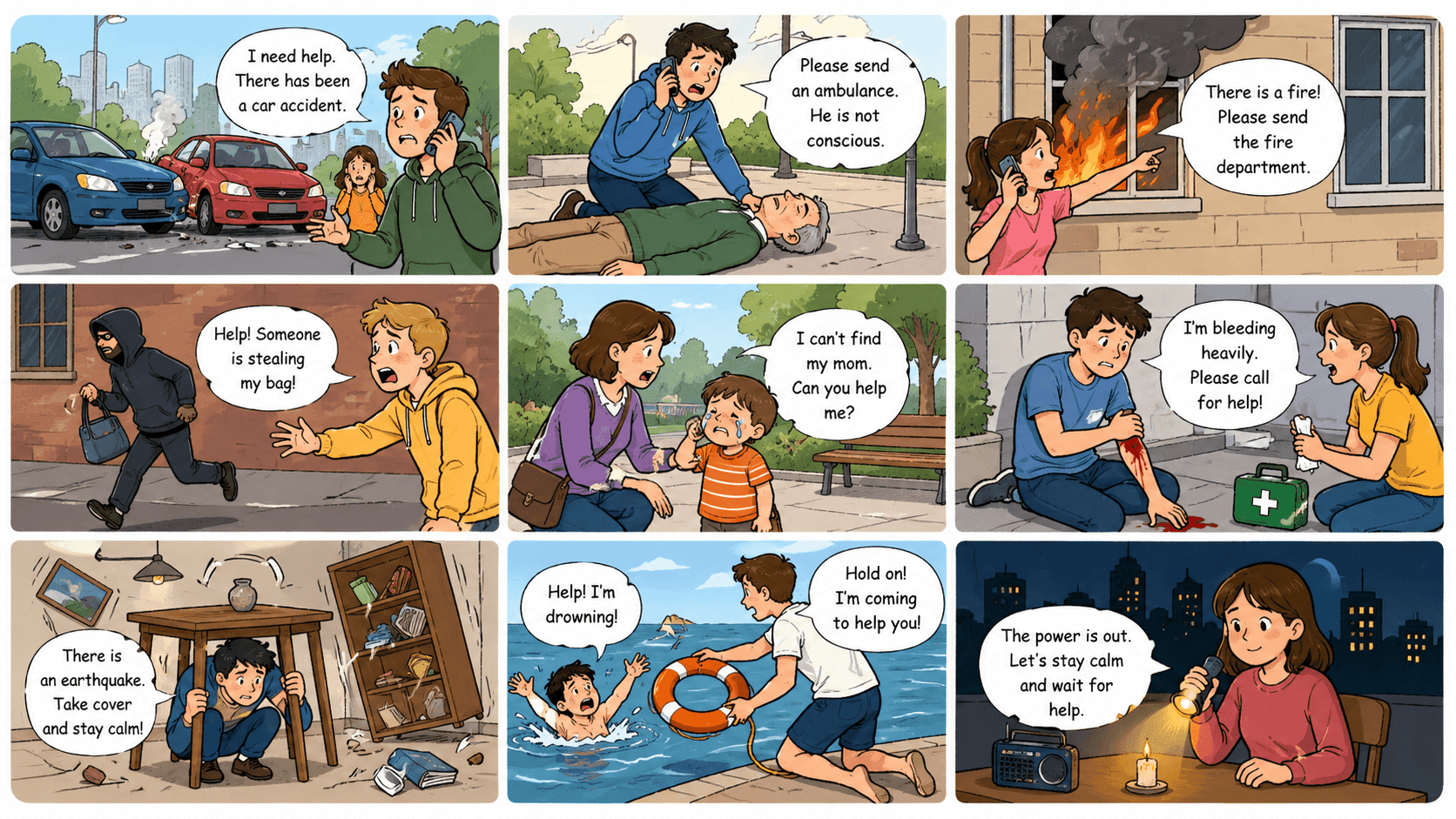
身体不适
“I feel faint.”— 我感到头晕。
“I'm nauseous.”— 我觉得恶心。
“I'm about to faint.”— 我快要晕倒了。
“I'm having trouble breathing.”— 我呼吸困难。
“My vision is blurry.”— 我看东西很模糊。
“I have a splitting headache.”— 我头疼得厉害。
“I think I've sprained my ankle.”— 我觉得我扭伤了脚踝。
“My leg hurts and I can't move it.”— 我腿疼,动不了。
“I've cut myself badly.”— 我割伤了,伤口很深。
“I'm bleeding a lot.”— 我流了很多血。
“I'm having chest pains.”— 我胸口疼。
“I feel numbness in my arm.”— 我的胳膊发麻了。
“I'm allergic to penicillin.”— 我对青霉素过敏。
“My throat is closing up.”— 我的喉咙好像肿起来了。
“I've taken ibuprofen.”— 我服用了布洛芬。
“I forgot to take my medication.”— 我忘了吃药。
“I think I have a fever.”— 我觉得自己发烧了。
“My heart is beating very fast.”— 我的心跳得很快。
物品遗失或被盗
“My wallet has been stolen.”— 我的钱包被盗了。
“My credit card has been stolen.”— 我的信用卡被偷了。
“I've lost my bag.”— 我把包丢了。
“I can't find my phone.”— 我找不到我的手机了。
“I think I left it on the taxi.”— 我想我把它落在出租车上了。
“I forgot my laptop in a taxi.”— 我把电脑忘在出租车里了。
“Is there a lost and found?”— 有失物招领处吗?
“Could you help me contact lost property?”— 你能帮我联系失物招领处吗?
“I need to report a theft.”— 我需要报一起盗窃案。
“Police, I'd like to file a report.”— 警察先生/女士,我想报案。
“Where can I block my card or phone?”— 我在哪里能挂失我的卡/手机?
交通事故
“There's been a car accident.”— 发生了车祸。
“I witnessed an accident.”— 我目睹了一起事故。
“Someone has been hit.”— 有人被撞了。
“Could you call an ambulance?”— 你能叫辆救护车吗?
“The car ran a red light.”— 那辆车闯红灯了。
“I was in a taxi and it crashed.”— 我坐的出租车出了事故。
“Is everyone alright?”— 大家都没事吗?
“Is there any first aid kit?”— 有急救箱吗?
“My friend is trapped inside the car.”— 我的朋友被困在车里了。
其他紧急场景
“There's been a fire.”— 发生火灾了。
“I smell gas.”— 我闻到煤气味了。
“There's been a power outage.”— 停电了。
“Someone is unconscious.”— 有人失去意识了。
“I can't wake him/her up.”— 我叫不醒他/她。
“There's a medical emergency!”— 有医疗紧急情况!
“There's a fight outside.”— 外面有人打架。
“Help! I need assistance!”— 帮忙!我需要帮助!
打紧急电话的注意事项
在英语国家打紧急电话(如英国 999、美国 911、澳大利亚 000)时,接线员通常会依次问以下几个问题,提前知道这些问题能让你快速回答:
小贴士:有时接线员的语速较快,而且需要你保持冷静、简洁地回答问题。记住:电话接通后,先说你在哪里,再说发生了什么——位置信息是急救最重要的优先级。
举例
“I need an ambulance. I'm at 123 Main Street, outside the supermarket. My friend collapsed and is not responding.”
(我需要救护车。我在主街123号,超市外面。我的朋友晕倒了,没有反应。)
“Please come quickly.”— 请快点来。
“How long will it take for help to arrive?”— 救援人员多久能到?
“I'm staying on the line.”— 我会一直在电话上等着。
在陌生环境中寻求帮助
不只是紧急情况,在异国他乡遇到普通困境时,这些句型也很有用:
“Excuse me, is there a pharmacy nearby?”— 打扰,附近有药店吗?
“I need to find the nearest police station.”— 我需要找最近的警察局。
“My phone is dead and I'm lost. Could I borrow your phone for a moment?”
(我手机没电了,我迷路了。我能借用一下您的手机吗?)
“Could you take a photo of me in front of this sign so I remember where I am?”
(你能帮我在这个路牌前拍张照让我记住我在哪里吗?)
“Is there someone here who speaks Mandarin?”
(这里有人会说普通话吗?)
练习题
练习一(选择题)
知识点:紧急情况的优先信息顺序
打急救电话时,接线员最需要你最先提供的信息是什么?
A. 详细讲述事情经过
B. 你的姓名和身份证号码
C. 你所在的位置
D. 伤者的年龄
练习二(选择题)
知识点:“Would you mind + V-ing”的用法
你想请旁边的陌生人帮你看一下行李。正确的表达是?
A. Would you mind to watch my luggage for a moment?
B. Would you mind watching my luggage for a moment?
C. Would you mind watch my luggage for a moment?
D. Would you mind you watch my luggage for a moment?
练习三(选择题)
知识点:报告症状时的精准表达
你扭伤了脚踝,走路困难。去医院就医,应该如何描述症状?
A. My foot is broken.
B. I think I've sprained my ankle — I twisted it about an hour ago and now it's swollen and painful to walk on.
C. My leg hurts.
D. There is a problem with my foot.
练习四(情景问答)
知识点:在紧急情况下用英语请求帮助
情境: 你在一个英语国家旅行,在地铁站突然感到剧烈头痛、视线模糊,站不稳了。旁边有一位路人。请用英语向他/她求助(4-6句话),说明你的情况,请求对方帮你叫救护车或带你去坐下,并告诉对方你对某种药物过敏(你自己决定是哪种)。
练习五(情景问答)
知识点:报告物品遗失
情境: 你刚下了出租车,发现自己的手机落在了车里。你正在附近的酒店大堂,请向前台工作人员寻求帮助(5-6句话),说明情况,询问是否有办法联系那辆出租车,以及是否需要报警或去失物招领。