表达喜好
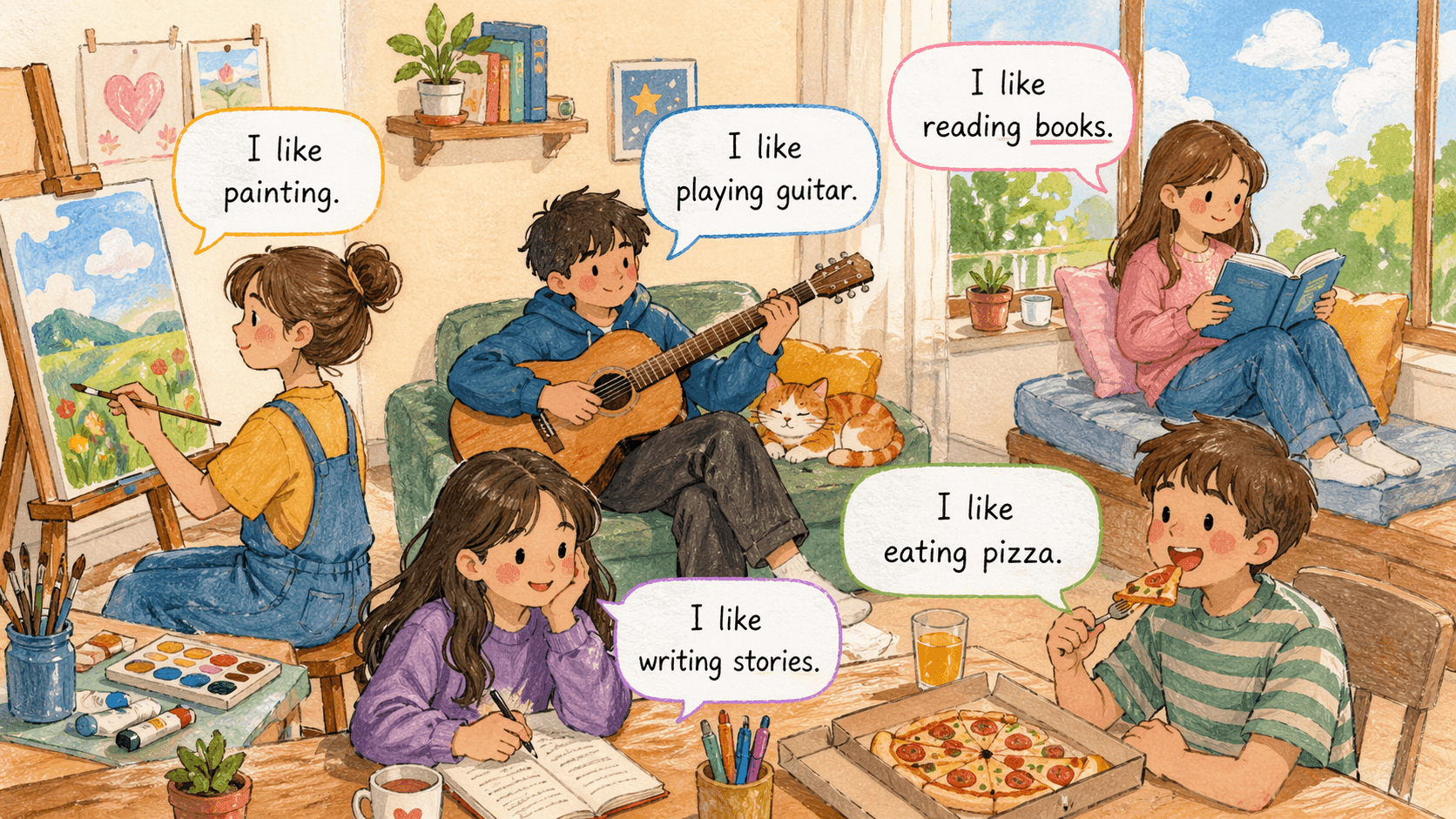
从“我喜欢”到“我超级迷上了这个”,在英语口语中描述“喜欢”远不止一句“I like”。英语里有各种各样表达喜好程度、偏好和兴趣的地道方式,能让你的表达更加丰富多彩,也更能展现你的个性。比如,从最普通的“I like...”到更热情的“I really enjoy...”、“I’m into...”再到极致强烈的“I’m absolutely obsessed with...”,都适用于不同的情境和心情。反过来,当你表达不喜欢时,也有很多微妙的表达,比如“I’m not really into...”(不太感兴趣)、“It’s not my thing.”(不是我喜欢的类型)、“I can’t stand...”或“I hate...”(极端不喜欢)。
通过选择不同的词汇和表达方式,不仅能更准确地传达自己的真实想法,还能让对话变得更自然、顺畅。喜好表达是日常交流中最常用、最容易让人产生共鸣的话题之一,也是快速拉近人与人距离的有效方法。无论是在介绍自己、结交朋友,还是日常闲聊时,熟练掌握各种喜好表达,都会让你的英语口语更加地道、更有表现力。
喜好的程度梯度
英语表达喜好有一个从强到弱的完整梯度,准确选用对应的程度,能让你的表达更精准,而不是所有事情都说“I like it”。掌握更多表达,还能让你的日常对话听起来更加自然、有层次,对方也能明显感受到你情绪的强弱和态度上的细微差别。
以下是从“超级喜欢”到“极度不喜欢”常见的表达及其对应的中文感受:
补充说明:
- “I'm absolutely obsessed with...”、“I'm absolutely passionate about...” 和 “I'm crazy about...” 表达的是非常极致的喜欢,适合描述你的爱好或兴趣(尤其当你想强调自己的热情时)。
- “I'm really into...” 有点类似中文的“我很入迷于……/我现在特别喜欢……”,听起来更贴近日常、年轻人的口语。
- “I don't mind...” 表达的是“没有特别喜欢/不反感”,而“It’s not my thing.” 更口语化地表示“这不是我那一挂的”。
- “I can't stand...” 和 “I hate...” 语气非常强烈,通常别用来形容人,更适合形容事物、行为或某种情况。
- “I'm not a fan of...” 属于比较委婉地表达不喜欢,适合正式/半正式场合。
“I hate”在英语口语中用来表示非常强烈的反感,使用频率比中文里的“我讨厌”更高——朋友聊天时说“I hate waiting in long lines”(我讨厌排长队)是很正常的表达。但在正式场合、工作环境或描述人物品味时,建议多用“I'm not a fan of...” 或 “I dislike...” 等更婉转、得体的说法,避免语气显得过激不礼貌。
通过灵活掌握这些表达,不论是跟朋友闲聊,还是在课堂、工作或面对外国人交流,都能让你的英语沟通更有层次和地道感。
喜好与原因
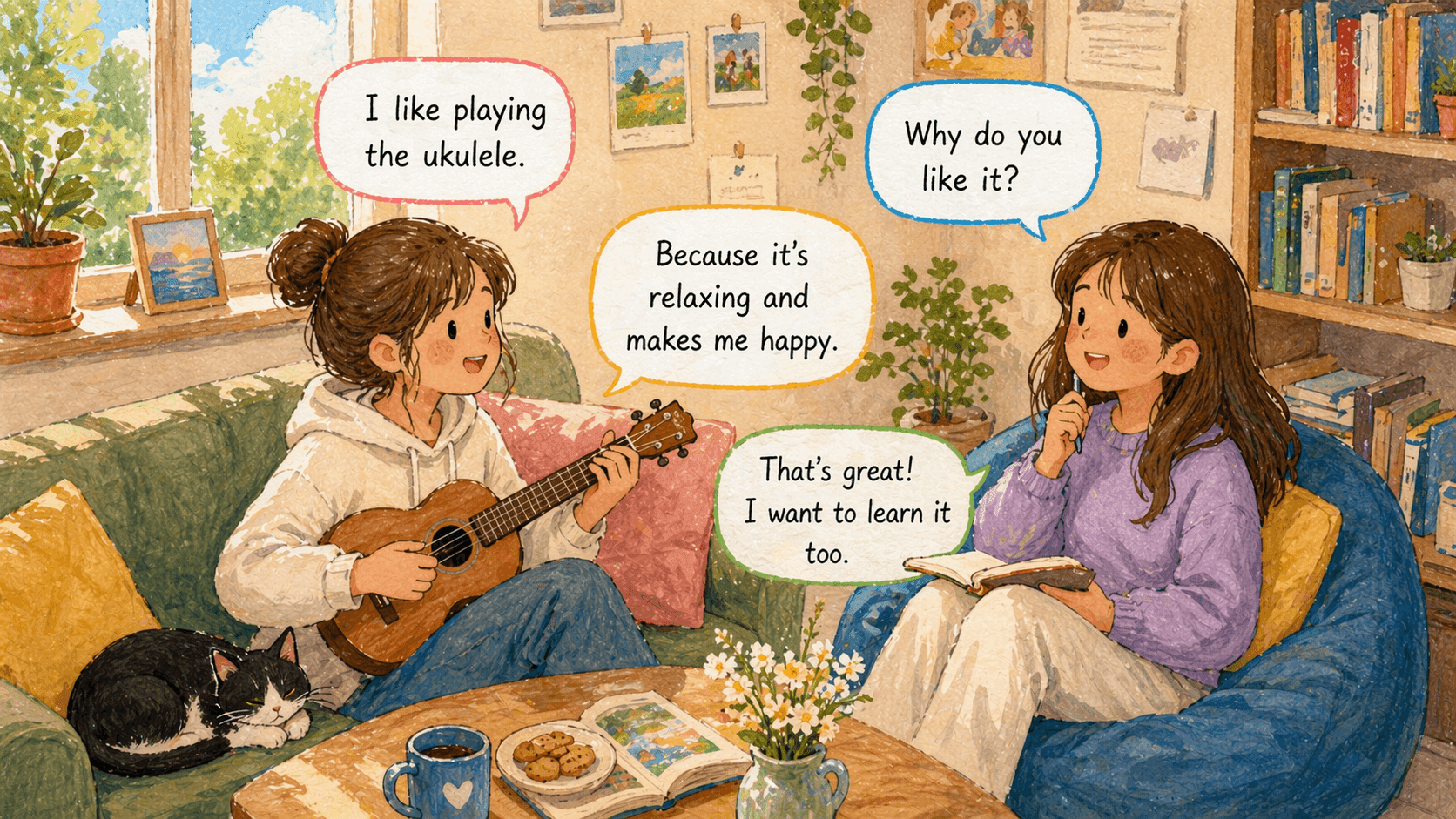
只说 “I like it” 通常会让对话停下来,因为对方不知道怎么继续聊下去。加上一句原因,不仅可以让你的表达更有内容,还能激发对方回应、产生更多新话题。原因表达不仅限于简单解释,还可以透露你的经历、情感、价值观,有助于建立更深刻的人际连接。
常用连接词:because / since / as / because of + 原因
-
“I love hiking because it clears my head completely.”
(我很喜欢徒步,因为它能让我的思路完全清空。) -
“I'm really into jazz since it's so complex and layered.”
(我非常喜欢爵士乐,因为它既复杂又有层次感。) -
“I enjoy cooking as it lets me be creative.”
(我喜欢烹饪,因为它让我有创造力。) -
“I'm a big fan of documentaries because of the stories they tell.”
(我很喜欢纪录片,因为它们讲述的故事。) -
“I like working out because it gives me energy and helps me relieve stress.”
(我喜欢锻炼,因为它能让我充满活力,还能减压。) -
“I’m into painting, mostly because it relaxes me after a busy day.”
(我喜欢画画,主要是因为一天忙完后画画能让我放松。) -
“I enjoy playing board games since they're a fun way to connect with friends.”
(我喜欢玩桌游,因为这样能和朋友们增进感情。)
除了 because 之类,还可以用这些方式表达“原因”:
“What I love about it is...” — 我喜欢它的地方是……
- “What I love about yoga is how peaceful it makes me feel.”
- (我喜欢瑜伽的地方是它让我感到很平静。)
“The thing I enjoy most about [活动] is...” — 我最享受[活动]的是……
- “The thing I enjoy most about traveling is experiencing different cultures.”
- (我最享受旅行的是体验不同的文化。)
“I find it really [形容词].” — 我觉得它非常[形容词]
- “I find it really fulfilling to help others.”
- (我觉得帮助别人很有成就感。)
“It makes me feel [情感/状态].” — 它让我觉得……
- “Baking makes me feel relaxed and happy.”
- (烘焙让我觉得放松又开心。)
“It reminds me of...” — 它让我想起……
- “I like listening to classic rock because it reminds me of my childhood.”
- (我喜欢听经典摇滚,因为那让我想起了童年的时光。)
小贴士: 在表达“我喜欢……”时,紧接着补充1-2句原因,能让你的回答更生动有趣,比如:
- “I love spicy food because it’s exciting and reminds me of home.”
(我喜欢辣的食物,因为很刺激,也让我想起家乡。)
友好互动时,理由可以更生活化,比如:
- “I like coffee shops since I enjoy people-watching.”
(我喜欢咖啡馆,因为我喜欢观察人群。)
你还可以适当分享个人故事,让交流更有温度:
- “I'm a big fan of animation, mostly because my brother and I used to watch cartoons together as kids.”
(我很喜欢动画片,主要因为小时候我和哥哥经常一起看。)
通过这些多样表达,你会发现英语对话真的能变得丰富、立体许多!
对话示范:自然地聊喜好
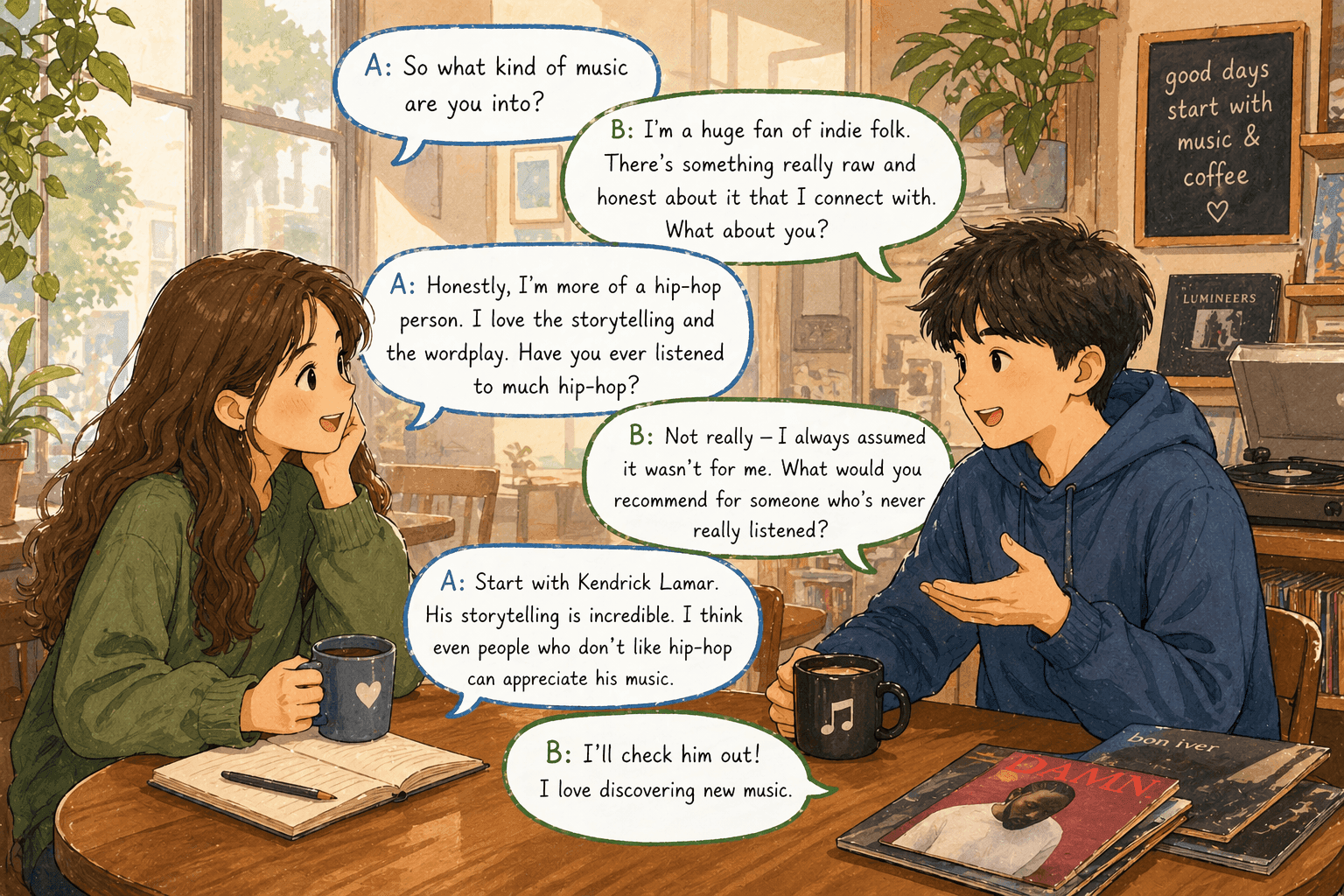
A: So what kind of music are you into?
(你喜欢什么类型的音乐?)
B: I'm a huge fan of indie folk. There's something really raw and honest about it that I connect with. What about you?
(我非常喜欢独立民谣。它有一种非常真实、诚恳的东西,让我很有共鸣。你呢?)
A: Honestly, I'm more of a hip-hop person. I love the storytelling and the wordplay. Have you ever listened to much hip-hop?
(说实话,我是个嘻哈迷。我喜欢它的故事性和文字游戏。你有没有听过多少嘻哈?)
B: Not really — I always assumed it wasn't for me. What would you recommend for someone who's never really listened?
(不多——我一直以为它不适合我。对于从来没怎么听过的人,你有什么推荐?)
A: Start with Kendrick Lamar. His storytelling is incredible. I think even people who don't like hip-hop can appreciate his music.
(从Kendrick Lamar开始。他的叙事非常棒。我觉得即使不喜欢嘻哈的人也能欣赏他的音乐。)
B: I'll check him out! I love discovering new music.
(我去听听!我喜欢发现新音乐。)
对话要点:
B 说完自己的喜好后加了“What about you?”——这是让对话保持双向的关键动作,在自己说话之后立刻把空间交还给对方。
A 说“I'm more of a [类型] person”——这是一个很地道的表达方式,“I'm more of a + [类型/角色] + person”意思是“我更偏向是某一类型的人”。
“I always assumed it wasn't for me.”——这是表达“我以为我不喜欢这个”的地道说法,比“I thought I don't like it”更自然。
多样化的喜好表达
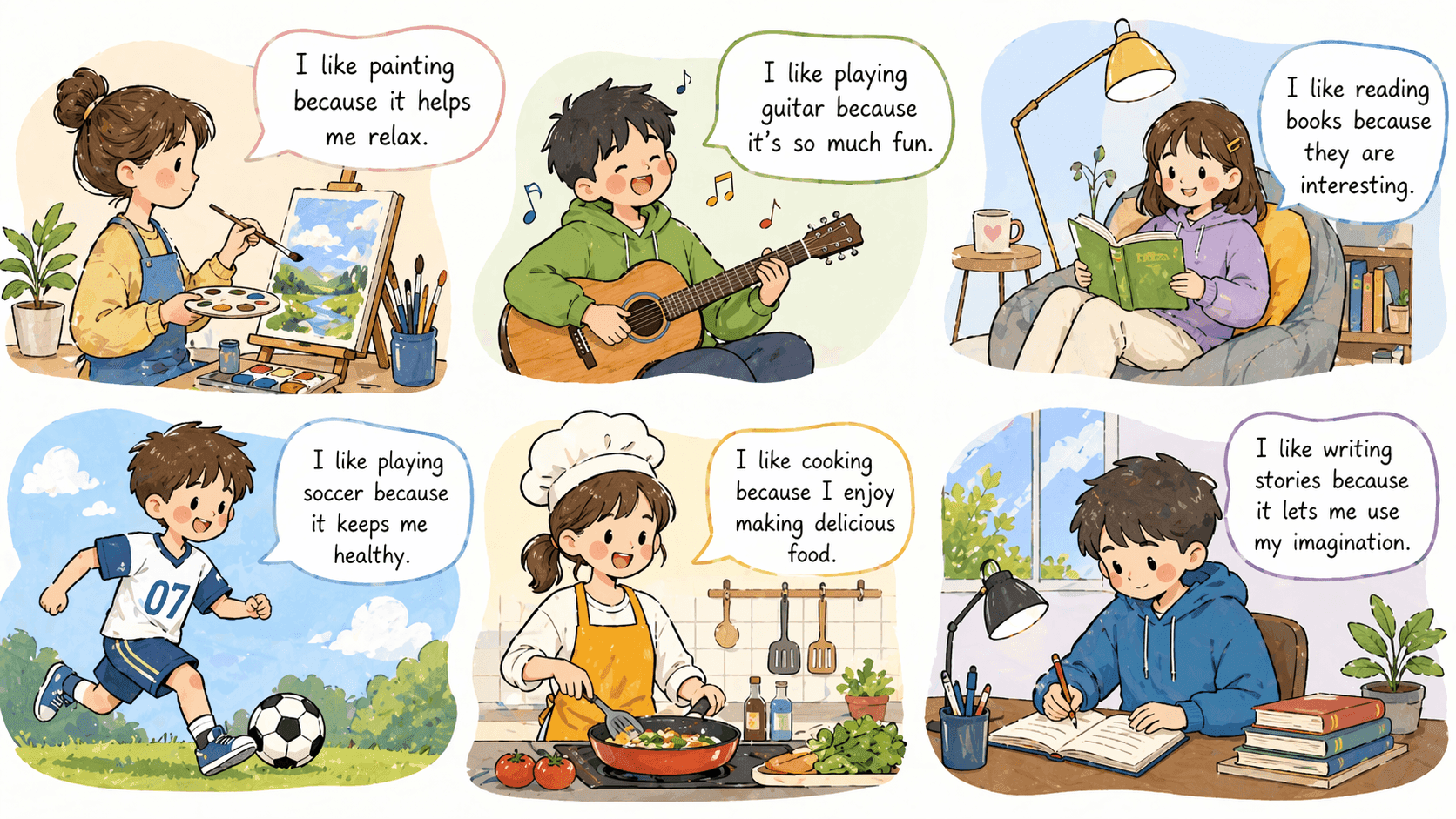
除了 “I like”,英语口语中还有许多表达偏好与兴趣更地道、更细腻的说法,让你的对话层次更丰富,也更具个性和真实感。学会这些表达,不仅能让你显得非常native,还能更灵活地描述自己和他人的喜好细微差别。
更深层、极致喜欢的表达
- “I'm totally hooked on [话题].”— 我完全被……迷住了/上瘾
- “I can't get enough of [话题].”— 我怎么也满足不了对[话题]的喜爱
- “I'm obsessed with [话题].”— 我着迷于……(非常强烈的喜好)
- “I'm absolutely crazy about [话题].”— 我为……疯狂/非常非常喜欢……
- “I'm a sucker for [类型/事物].”— 我对……完全没抵抗力
生活化表达——你的兴趣和“迷”
- “I could talk about [话题] all day.”— 我可以聊[话题]聊一整天
- “It's my guilty pleasure.”— 这是我的“罪恶享受”(喜欢但有点不好意思说)
- “I've been binge-watching [剧名].”— 我一直在追[剧名](刷剧)
- “I'm really into [领域/事物].”— 我很喜欢/入迷于……
- “I'm a huge fan of [歌手/电影/球队].”— 我是……的超级粉丝
- “I collect [物品].”— 我收集……(表达一种兴趣爱好)
对某类事物的整体偏好与“倾向”
- “I tend to prefer [A] over [B].”— 我倾向于更喜欢A而不是B
- “I'm more of a [A] person than a [B] person.”— 我偏向属于A而非B的人
- “[A] is more my speed than [B].”— A 比 B 更符合我的节奏
- “I'm drawn to [类型].”— 我被[类型]所吸引
- “I gravitate towards [类型/风格].”— 我总会被……吸引
- “My taste leans toward [风格].”— 我的品味偏向……
温和或有限喜欢
- “I'm not opposed to [食物/事物].”— 我不排斥……
- “I don't mind [事物].”— 我无所谓/觉得还行
- “I'm okay with [事物].”— 对……没意见,可以接受
- “I quite enjoy [事物].”— 我挺喜欢……
表达“没有特别喜欢”或“感兴趣一般”
- “It's not my thing.”— 这不是我喜欢的类型
- “I'm not really into [类型] that much.”— 我不是很喜欢……
- “I can take it or leave it.”— 无所谓,喜欢或不喜欢都可以
询问他人的喜好
比 “What do you like?” 更道地、具体的问法有很多,不同场景可以用不同表达:
- “What kind of music are you into?” — 你喜欢哪类音乐?
- “Are you more of a coffee person or a tea person?” — 你是更喜欢咖啡还是茶?
- “What's your go-to movie when you want to relax?” — 你想放松时通常会选哪部电影?
- “What do you usually listen to when you’re working?” — 你工作时一般听什么音乐?
- “Any favorite authors when it comes to fiction?” — 说到小说作家,你有最喜欢的吗?
- “Have you ever tried hiking? What did you think?” — 你试过徒步吗?感觉怎么样?
- “Is there anything you used to like but have kind of grown out of, like a hobby or band?” - 有没有你以前喜欢但现在不再那么着迷的爱好或乐队?
- “Is there anything you're really into these days, like a TV show or a sport?” — 你最近有没有特别感兴趣的东西,比如某个剧或运动?
- “Who are your favorite artists?” — 你最喜欢的艺术家是谁?
- “Is there a food you can't live without, for example, noodles or chocolate?” — 有没有一种食物你“离不开”,比如面条或巧克力?
“What's your go-to [话题]?” 是英语口语中非常自然的问法,“go-to” 意思是“首选的、最常用的”。例如:“What's your go-to coffee order?”(你最常点什么咖啡?)比 “What coffee do you usually like?” 更地道,显得更贴近实际生活语境。
有时候也可以用 “How do you feel about [事物]?”(你怎么看待……) 或者 “Do you care much about [领域]?”(你关心/在意……吗?)来自然发起喜好话题。
文化视角:谈喜好的英语社交功能
在英美文化中,谈论喜好和品味是建立友谊、拉近距离、展示个人特色的重要方式之一。和直接问“你多大了”“你赚多少钱”这类涉及隐私的问题相比,问“你喜欢什么音乐”“你最近在追什么剧”则是更被接受且能顺利展开的社交话题切入点。通过聊兴趣,人们可以迅速找到共同话题、建立连接,而且不会让对方觉得被打探隐私。
还有一个文化特点是:英语文化非常鼓励人们有明确、坦率的个人品味和立场。用“I’m not really into horror movies, they’re too intense for me.”(我不是很喜欢恐怖片,对我来说太刺激了),比含糊地说“maybe, a bit”更受欢迎,因为有自己的态度,能让对话继续推进,也让人觉得你比较真实、好相处。
此外,表达“guilty pleasure”(心头好但小小羞于承认的爱好)、“go-to choice”(首选项)等,也体现了英美人在谈论兴趣时的自如幽默与自信。
小结:
- 多用不同表达丰富语言,显得地道、有趣、有人情味;
- 勇敢表达清晰偏好,不必陷于“差不多”或“都喜欢”;
- 以兴趣相关话题开场,往往是快速结识/建立新关系的居家必备技能!
练习题
练习一(选择题)
知识点:喜好程度词汇的准确匹配
你想表达“这种食物还行,我不讨厌也不特别喜欢”,下面哪个表达最准确?
A. I love it.
B. I can't stand it.
C. I don't mind it.
D. I'm obsessed with it.
练习二(选择题)
知识点:喜好表达加上原因
你想说“我非常喜欢烹饪,因为它让我觉得既有创意又放松”,下面哪个表达最完整自然?
A. I love cooking because it's good.
B. I really enjoy cooking since it's both creative and relaxing.
C. I like cooking. It is creative. It is relaxing.
D. Cooking — I enjoy it for reason.
练习三(选择题)
知识点:“go-to”的正确用法
“What's your go-to comfort food when you're feeling down?”这句话的意思是:
A. 你什么时候会吃让你感觉舒服的食物?
B. 你心情不好时,最常选择吃什么食物来安慰自己?
C. 你最不喜欢的食物是什么?
D. 你平时的饮食习惯怎么样?
练习四(情景问答)
知识点:用不同程度的喜好词汇完整表达
情境: 请针对以下三个话题,各写一句体现不同喜好程度的表达,并加上简短的原因(共三句):
话题一: 你非常喜欢看纪录片(强烈喜欢)
话题二: 你还行,能接受早起(中性)
话题三: 你非常不喜欢长时间等地铁(强烈不喜欢)
练习五(情景问答)
知识点:喜好话题的完整对话
情境: 你在参加一个英语角活动,旁边坐着一位你不认识的人 Michael。请用英语开始一段关于电影喜好的对话(5-6句),包含:① 用一个自然的问题引入话题 ② 分享你自己的喜好(带程度词和原因) ③ 询问他的喜好 ④ 对他的回答表达回应并追问